County of Los Angeles
Department of Public Health
Chronic Disease and Injury Prevention Division
PLACE Program
3530 Wilshire Boulevard, Suite 800
Los Angeles, CA 90010
E-mail: place@ph.lacounty.gov Phone: (213) 351-7862
Policies for Livable, Active Communities and Environments (PLACE) Program
The PLACE Program is dedicated to fostering policy
change that supports the development of healthy, active
environments for all Los Angeles County residents.
PLACE News
Bike and
Pedestrian Counts in Glendale: A method of assessing traffic patterns and improving bicycle infrastructure
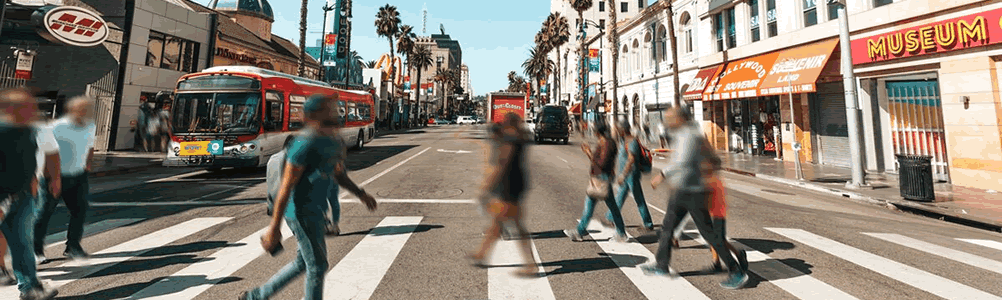
In early September, Glendale residents and community advocates took part in a Citywide Bike and Pedestrian Count. The Count is a method
of collecting data for traffic patterns and usage. Not only will results be used to determine frequently used routes to be included in the
City's Safe and Healthy Streets Plan, but to also steer the City's efforts to enhance Glendale's bicycle infrastructure.
El Monte Holds First Community Meeting
The City of El Monte held a community meeting to gather input on how to become a healthier city. Approximately 150
community members attended and provided suggestions such as more healthy food choices and more areas to bicycle and walk.
These ideas will help shape the new Health and Wellness Element of the city's general plan.
City of Long Beach Hires Bike Expert
Bike expert Charlie Gandy is the City of Long Beach's new mobility coordinator. Can he build a more bikeable Long Beach?
Department of Public Health Awards Built Environment Grants
The PLACE program is pleased to announce the funding of five organizations within Los
Angeles County. Over the next three years, each grantee will develop a policy and
physical project aimed at increasing physical activity in their community.
Examples of policies include incorporating a Health
Element into a city's General Plan and revising a city's
Bicycle Master Plan to make it easier for residents to
bike around their community.
PLACE's Picks
Article: Recommended Community Strategies and Measurements to Prevent Obesity in the United States
Recent reports have shown that approximately two-thirds of U.S. adults and one-fifth of U.S. children are obese or overweight.
This trend is a growing epidemic and is dependent upon many built environment factors. For this reason, it is important to promote healthy
communities and lifestyles.
A report by the CDC identified and recommended a set of strategies and associated measurements that communities and local
governments can use to plan and monitor environmental and policy-level changes for obesity prevention. It provides a resource
of these policies and recommendations to help address this problem on a community level.
Video: Unnatural Causes
The series sheds light
on the mounting evidence that our health is to a very large degree determined by our social circumstances, wealth,
neighborhood conditions, and work life. It presents both research and personal vignettes that show that not only are those
living in poverty adversely impacted, but at each descending rung of the socioeconomic ladder, people tend to be sicker and
die sooner.
An important message of the series, supported by the research, is that improving the public's health will require
efforts in a broad range of areas outside the traditional public health and health care sectors, including schools and
educational systems, housing, land use and community design, and economic development.
By making active transportation a viable option for everyday travel, we will cost-effectively reduce oil dependence, climate pollution and obesity rates while providing more and better choices for getting around town.
Read the report to learn more about how adequate federal investment in bicycling and walking will create healthier places for healthier people.