What's the Issue?
Click on the image below to learn about the connection between climate change and public health.
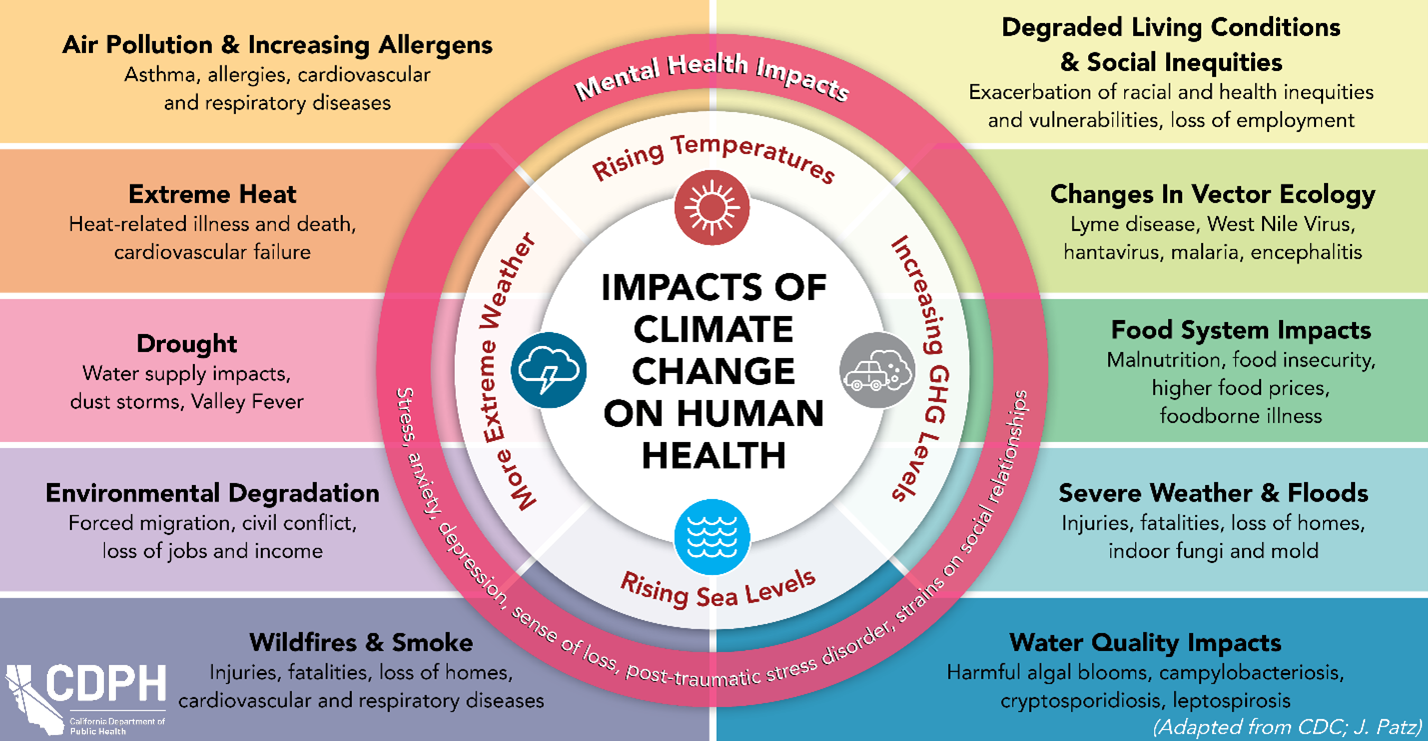
Source: This image was adapted from the Centers for Disease Control and Prevention (CDC) and J. Patz.
Why This Work Matters
Climate change is impacting human lives and health in a variety of ways. It threatens the essential ingredients of good health – clean air, safe drinking water, nutritious food supply and safe shelter – and has the potential to undermine decades of progress in global health.
The effects of climate change are happening now. In addition to slowing the progress of climate change, adaptation to our changed living environments will be crucial.
While everyone will be affected, some groups will experience a greater impact. Front line
individuals, children, and older adults — face higher risks from climate change. These
communities have fewer resources and less ability to adapt to and recover from the negative
health effects of climate change. Climate change is just one of many public health crises that
are faced by frontline communities.
For more information, please visit
Environmental Justice.
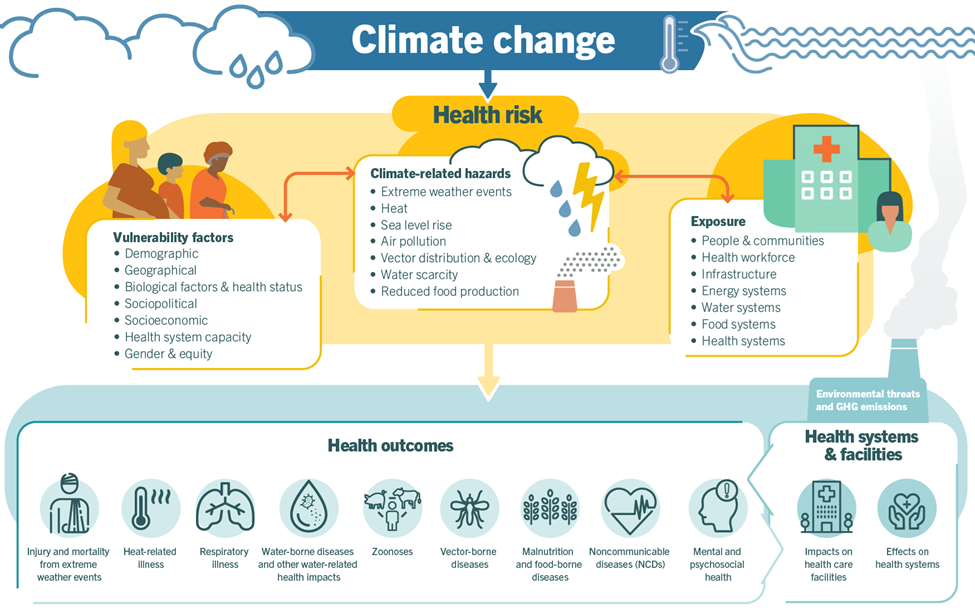
Source: This image was developed by the World Health Organization.
Our Work in Action
Key projects and activities include:
What Community Can Do
- Report an Environmental Health Hazard – Learn how to report issues affecting your community by visiting the How and Why to Report Problems page or viewing the Reporting Environmental Problems FAQ in both English and Spanish for Unincorporated County and Incorporated Cities.
- Make Your Voice Heard – Policies and programs benefit from community participation. Share your input and learn how to get involved on our Policy page.
- Access Data Resources – Explore environmental justice and climate health data on our Data Resources Page .
- Stay Informed – Participate in community meetings, workshops, and events hosted by local organizations. Community-based organizations provide opportunities for residents to connect with their neighbors and the surrounding communities.