Healthy Environments, Health Lives: Why Environmental Justice Matters
Everyone should be able to breathe clean air, drink safe water, and live in neighborhoods that support their health. Where we live, work, and play shapes the air we breathe, water we drink, the streets we walk, outdoor spaces we can access, and the food we can get.
The Legacy of Past Policies
Some neighborhoods in Los Angeles face greater environmental risks because of past policies like “redlining.” In the 1930s, based on a survey by the Home Owners’ Loan Corporation (HOLC), the federal government crafted a national set of standards for rating neighborhoods based on mortgage and investment risk: A for best, B for still desirable, C for declining, and D for “hazardous.”
“Redlined” neighborhoods, rated D, were often home to African-Americans, Mexican-Americans, Asian-Americans, and recent immigrants.
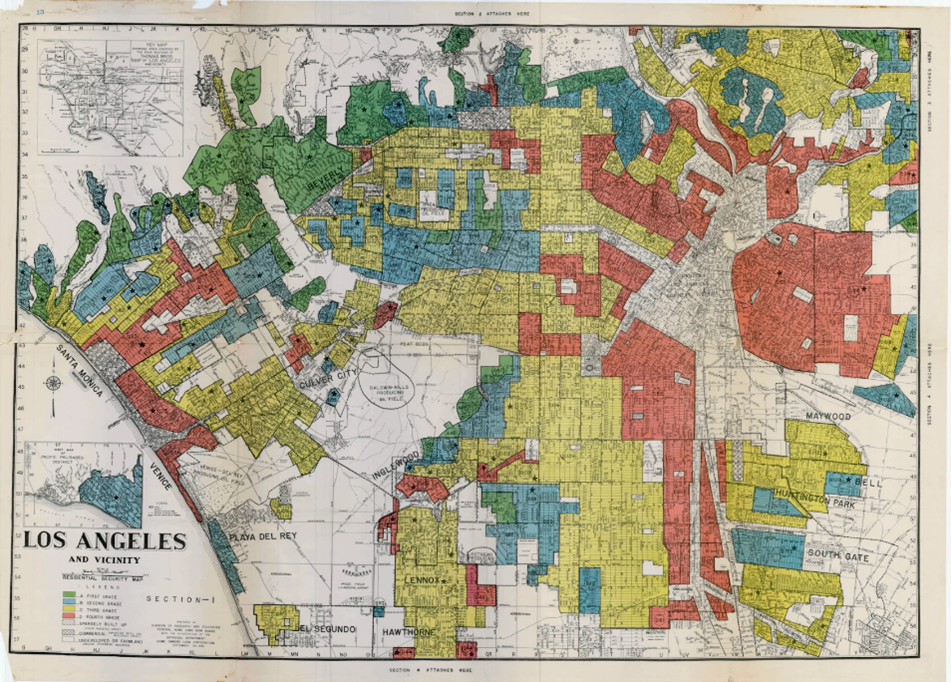
Homes there were often valued lower than they were worth, and families and individuals were denied, or offered only with high rates or restrictive terms, mortgages, loans for home improvements (maintenance, upkeep and renovation), and insurance. Not being able to get money they needed led to decline and reinforced the neighborhood’s “redline” designation, making it even harder to buy, maintain, or sell property.
- Families struggled to maintain their homes.
- Building financial security was much harder.
- Access to groceries, healthcare, and essentials was limited.
- Neighborhoods received little investment in roads, parks, or public services.
- Industrial sites and freeways were often nearby, increasing residents’ exposure to pollution.
Redlining was outlawed in the late 1960s, but its effects remain.
Neighborhoods at Greatest Risk
Today, many neighborhoods that were affected by redlining still face the highest environmental risks. People in these “frontline communities”, many of whom are Black, Latino, Indigenous, immigrant, or low-income, are exposed to more pollution, extreme heat, and other hazards.
These risks are the lasting effects of past policies, like redlining, and decisions. As a result, people in these neighborhoods have:
- Higher rates of asthma, lung disease, heart disease, cancer, heat stroke, and early death
- Worsening of existing health problems due to pollution
- Fewer resources to prevent or recover from environmental and climate-related threats like wildfires and extreme heat
What Environmental Justice Can Do
Everyone should be treated fairly and able to participate in decisions that shape the places they live, work, play, and learn. The California Environmental Protection Agency (Cal-EPA) emphasizes these principles of environmental justice.
Public Health works to protect all neighborhoods, especially those facing greater barriers to clean air, safe water, healthy housing, and access to essential goods and services. We work to reduce health risks and improve local environments for people who live, go to school, and work in these neighborhoods.
- Communities with clean air, safe water, accessible outdoor space, and housing that supports health
- Easier access to healthy food, jobs, and everyday services
- Neighborhoods that can better withstand and quickly recover from extreme heat, wildfires, and other environmental or public health threats
- Fewer preventable illnesses and lower healthcare costs
Our Work in Action
Working Together to Lower Environmental Risks and Improve Neighborhood Health. Our office works with communities, the County Board of Supervisors, government agencies, and local organizations to reduce environmental hazards and improve the health of neighborhoods with the greatest exposures. We also help shape policy, provide education, and offer guidance and technical support for local projects.
Key programs, projects and activities:
- Aliso Canyon Disaster Health Research Study – A five-year study on short- and long-term health effects of the Aliso Canyon disaster led by UCLA, informed by community input and engagement
- Battery Recycling Monitoring (Exide / Ecobat) – Raise community understanding of potential risks from battery recycling facilities and ensuring strong oversight to protect neighborhood health
- Extreme Heat – Protecting communities from dangerous heat by supporting cooling, outreach, and other actions that reduce heat-related illness and climate impacts
- Lead Free Homes LA – Making homes safer for children and families by removing lead paint hazards from older housing
- Oil and Gas Policy – Creating stronger health protections to reduce pollution and safeguard communities living near oil and gas operations
Related Programs:
- Policies for Livable Active Communities and Environments (PLACE) Program – Improving neighborhoods and public spaces for safe physical activity
- Nutrition & Physical Activity – Expanding access to healthy food in areas
What Community Can Do
- Report an Environmental Health Hazard – Learn how to report issues affecting your community by visiting the How and Why to Report Problems page or viewing the Reporting Environmental Problems FAQ in both English and Spanish for Unincorporated County and Incorporated Cities.
- Make Your Voice Heard – Policies and programs benefit from community participation. Share your input and learn how to get involved on our Policy page.
- Access Data Resources – Explore environmental justice and climate health data on our Data Resources Page .
- Stay Informed – Participate in community meetings, workshops, and events hosted by local organizations. Community-based organizations provide opportunities for residents to connect with their neighbors and the surrounding communities.