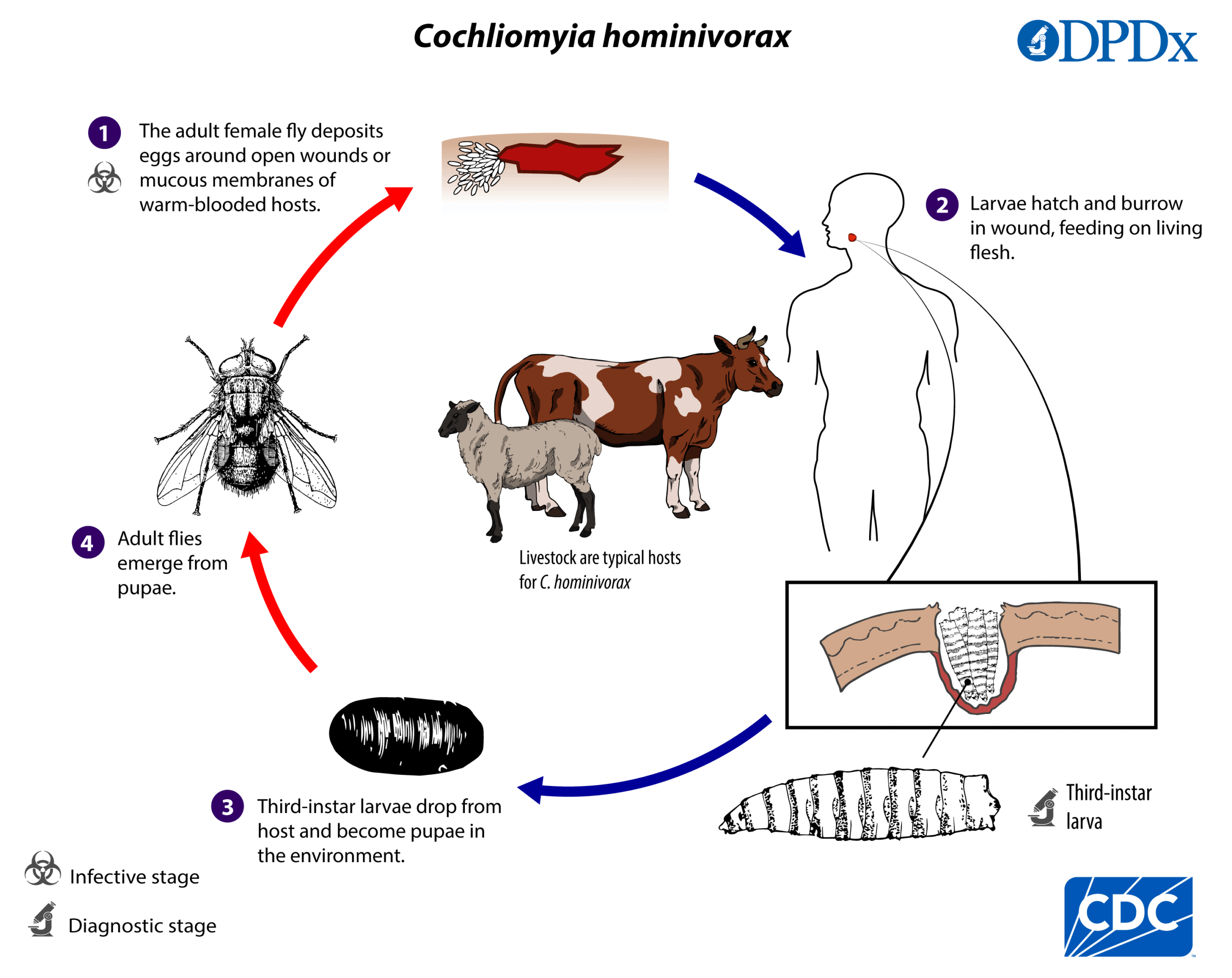
This page is for veterinary providers and animal control staff. Looking for something else?
USDA confirmed multiple cases of New World screwworm in animals in the United States beginning in June 2026. These are the first U.S. detections associated with the current outbreak that has been moving north through Central America and Mexico. Screwworm is not currently present in Los Angeles County.
The situation is evolving rapidly. Report suspected animal cases to CDFA immediately (see Reporting below). For the latest U.S. case information, see USDA's resources.
Animal movement may be restricted
In response to the screwworm detections in the U.S., federal and state authorities may restrict the movement, import, or export of animals, and these requirements can change quickly. Before traveling with, importing, or exporting any animal, confirm the current requirements with CDFA, CDPH, USDA, and CDC, and the state or country the animal is traveling to or from. Animals in or traveling from affected areas may not be able to move without official authorization.
California has its own requirements for pets entering the state from other states and countries because of screwworm. If you are bringing a pet into California, review the federal and state requirements for pets entering California before you travel.
Current situation
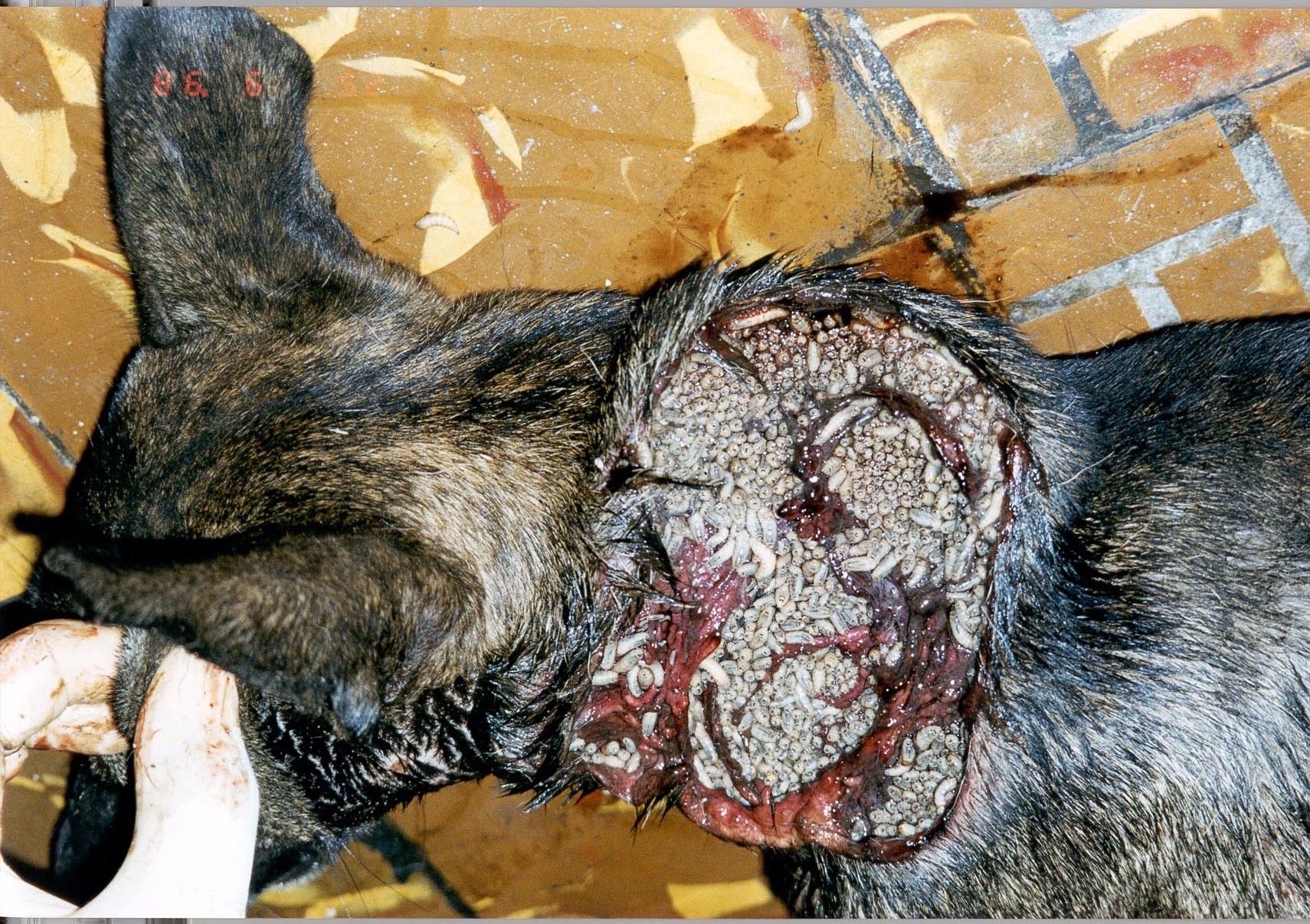
New World screwworm (screwworm or NWS) is a parasitic fly whose larvae (maggots) infest and feed on living tissue. Screwworm can affect any warm-blooded animal, including pets, livestock, wildlife, birds, and humans.
Screwworm is not currently present in Los Angeles County. Public Health is actively monitoring the situation.
- Screwworm has been moving northward through Central America since 2023.
- The movement of infested animals (or people) is the most likely route by which screwworm could travel long distances and become established in a new area, including Los Angeles County.
- Dogs have been the second most affected species in Mexico after cattle.
- Early recognition, prompt reporting, appropriate specimen handling, and thorough disinfestation are critical to prevent establishment.
Disease overview
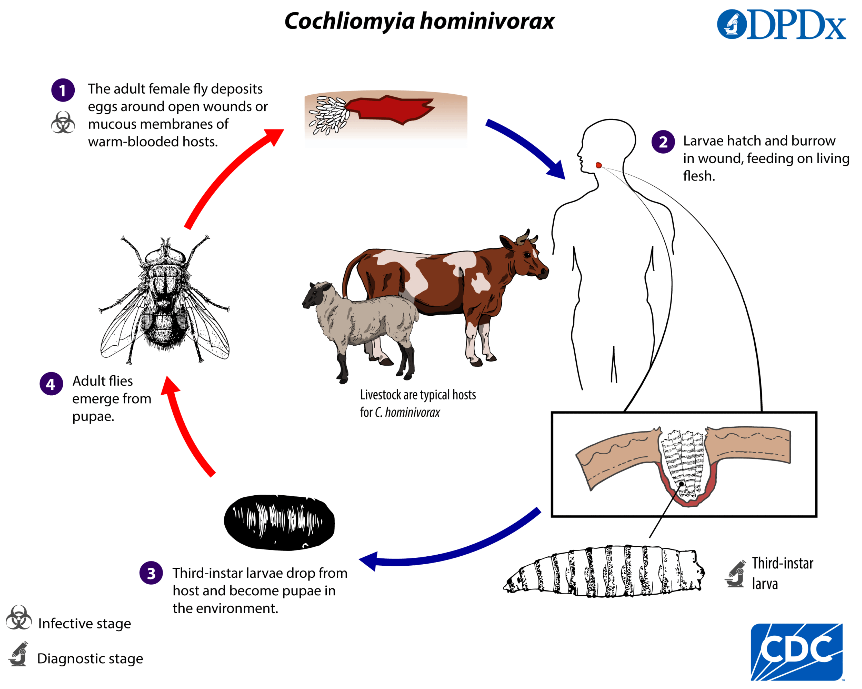
Screwworm lifecycle
NWS myiasis (maggot infestation) occurs when Cochliomyia hominivorax flies lay eggs in fresh wounds or in body openings with mucous membranes (for example nose, mouth, ears, eyes, umbilicus, or genitalia). Fly eggs hatch in wounds in less than 24 hours. Screwworms burrow (screw) into living tissue within 24 hours of eggs being laid, causing rapidly progressive tissue damage.
Screwworm differs from many other causes of myiasis because larvae invade healthy, living tissue.
The United States eradicated screwworm in 1966 using the sterile insect technique and has largely kept it out since, apart from isolated incursions such as the 2016 Florida Keys outbreak. As screwworm has spread north through Central America and Mexico, public health and agriculture officials have been monitoring and preparing for its possible return.
Clinical recognition
Suspect screwworm in any warm-blooded animal with maggots in wounds or body openings (nose, ears, eyes, mouth, umbilicus, genitalia), especially with a history of recent travel or importation.
- Rapidly enlarging, painful, draining, or foul-smelling wound.
- Wounds as small as insect or tick bites can be at risk.
- Larvae deep in lesions (they may burrow into wounds or openings).
- Egg masses around or in wounds.
Ask about origin and movement: recent travel, importation, or rescue, and the specific town or region the animal came from, not just the country or state.
Clinical photos (graphic)
The USDA photo gallery contains graphic images of screwworm infestations in animals.
View USDA screwworm photo galleryImmediately report suspected screwworm
California Department of Food and Agriculture (CDFA) – Animal Health Branch
(909) 947-5932 (Ontario District)
(916) 900-5002 (Headquarters)
More info
For animals in Los Angeles County, also report to LAC Department of Public Health, Veterinary Public Health (VPH)
(213) 288-7060
vet@ph.lacounty.gov
CDFA coordinates confirmatory larval identification through USDA's National Veterinary Services Laboratory (NVSL).
What to do: specimen handling and disinfestation
- Report suspected cases to CDFA first and then to LAC DPH. See contact information for both agencies above.
- Remove all eggs/larvae/flies into a sealed, leakproof container covered with 70%
ethanol or isopropyl
alcohol as quickly as possible to prevent reinfestation or spread.
- Using clean forceps, gently collect larvae of different sizes from several sites and depths within the wound, and place them into a container for submission following the CDFA specimen collection guidelines. It is especially important to collect specimens from the deepest part of the lesion.
- Do not discard larvae or eggs directly in the trash or outside on the ground. Place the sealed tubes with alcohol into a zip-top bag before disposal. See additional disinfestation guidance from USDA.
- Treat the wound appropriately and consider administering a product approved or otherwise authorized to treat screwworm.
- NWS larvae can infest humans, so if you may be exposed to NWS flies, protect yourself by wearing disposable gloves, covering any open wounds, and considering additional PPE as appropriate. If a person develops a suspicious wound, see the Healthcare Providers page.
Treatment
The U.S. FDA has conditionally approved or issued Emergency Use Authorizations (EUAs) for several prescription and over-the-counter (OTC) animal drugs to treat and/or prevent NWS myiasis in dogs, puppies, cats, and kittens. Consider prescribing medication for clients traveling with their pets to affected areas; owners should administer medication before returning to the U.S.
View FDA's NWS: Information for VeterinariansAdvising clients
Movement of animals to and from affected areas is the most likely way screwworm could be introduced and become established in a new area. When counseling clients, the key points are:
- Consider leaving pets at home when traveling to affected areas.
- Schedule an exam before travel and again after return, and keep pets on routine parasite prevention.
- For pets adopted, rescued, or imported from affected areas, confirm the specific town of origin and examine promptly.
- Check and treat wounds promptly, even small ones, and keep them clean and covered.
Full client-facing guidance is available on the Public & Pet Owners page.