This page contains general information about New World Screwworm. Looking for something else?
USDA confirmed multiple cases of New World screwworm in animals in the United States beginning in June 2026. These are the first U.S. detections associated with the current outbreak that has been moving north through Central America and Mexico. Screwworm is not currently present in Los Angeles County.
The situation is evolving rapidly. Report suspected animal cases to CDFA immediately (see Reporting below). For the latest U.S. case information, see USDA's resources.
Animal movement may be restricted
In response to the screwworm detections in the U.S., federal and state authorities may restrict the movement, import, or export of animals, and these requirements can change quickly. Before traveling with, importing, or exporting any animal, confirm the current requirements with CDFA, CDPH, USDA, and CDC, and the state or country the animal is traveling to or from. Animals in or traveling from affected areas may not be able to move without official authorization.
California has its own requirements for pets entering the state from other states and countries because of screwworm. If you are bringing a pet into California, review the federal and state requirements for pets entering California before you travel.
Current situation
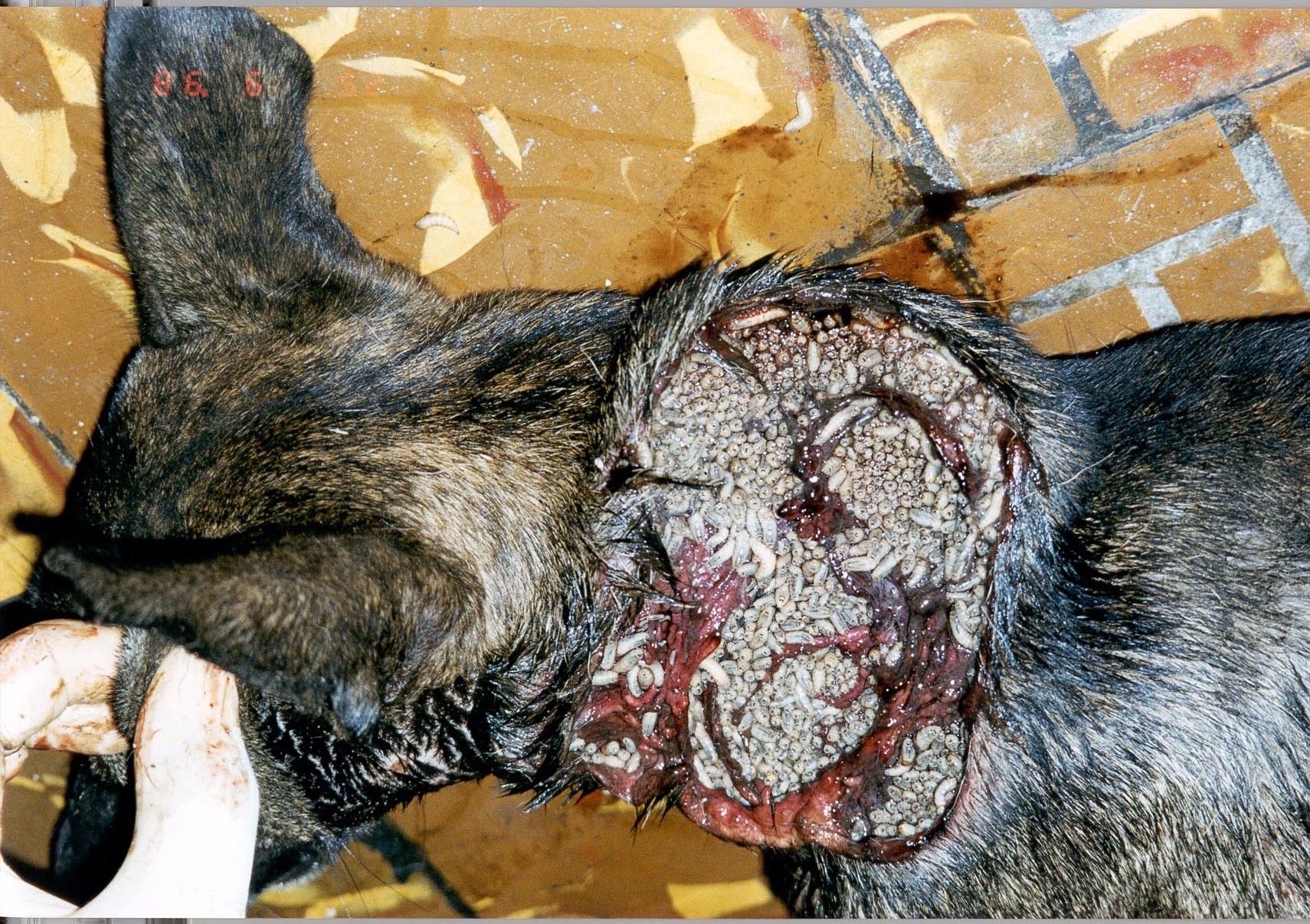
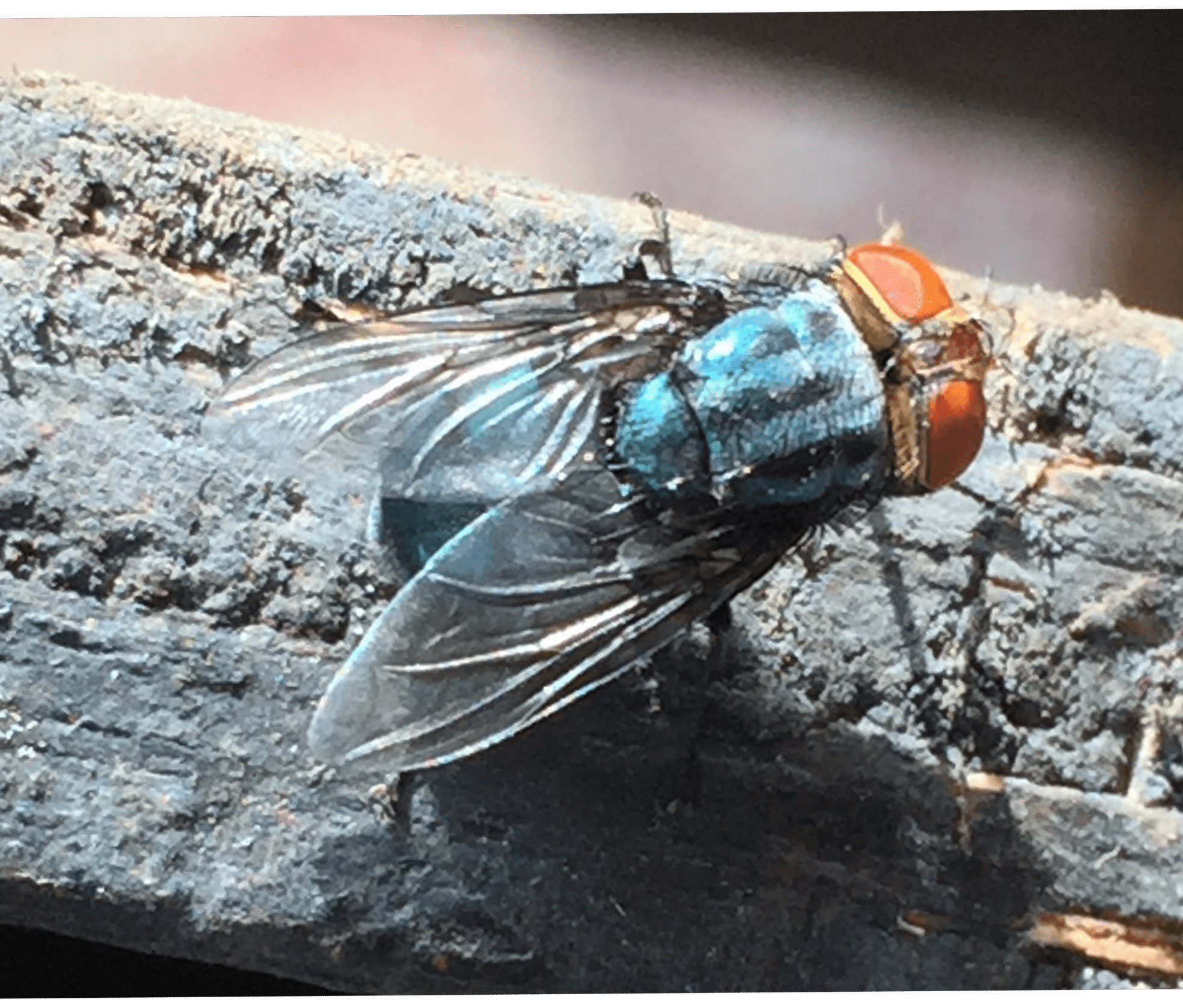
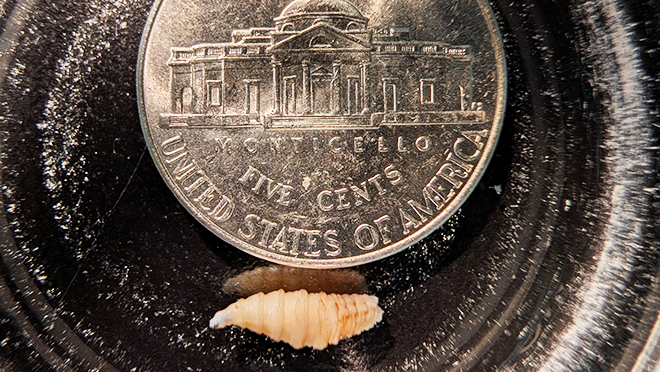
New World screwworm (screwworm or NWS) is a parasitic fly whose larvae (maggots) feed on the living tissue of warm-blooded animals, including pets, livestock, wildlife, and, rarely, people.
Screwworm is not currently present in Los Angeles County. Public Health is actively monitoring the situation.
- Screwworm has been spreading north through Central America and Mexico since 2023, and in June 2026 it was detected in animals in the United States for the first time in decades.
- Moving animals that are infested is the most likely way screwworm could reach and take hold in a new area. The flies themselves travel only short distances on their own.
- People are at very low risk.
Disease Overview
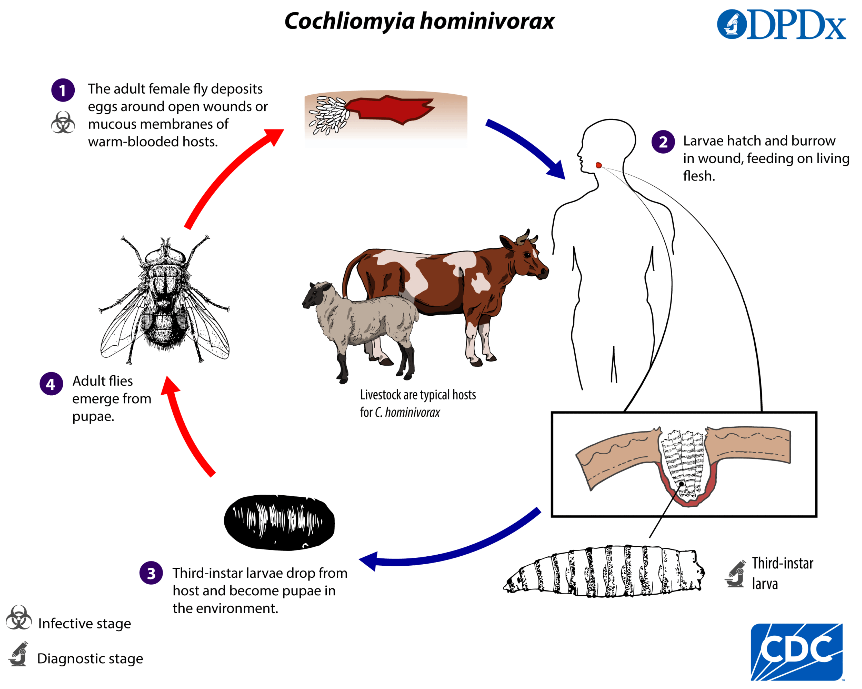
Screwworm lifecycle
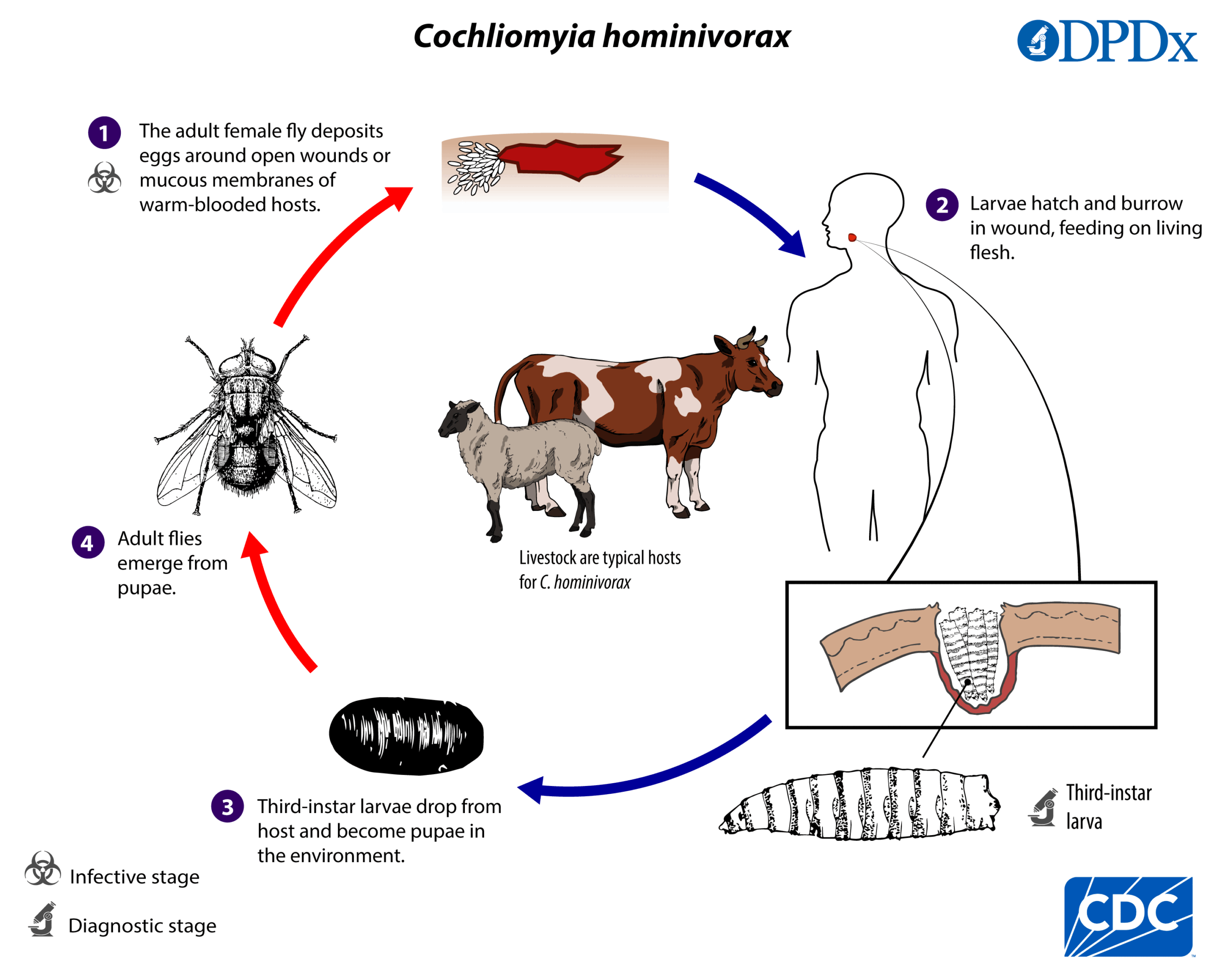
An adult screwworm fly lays its eggs in an open wound, or in a moist body opening such as the nose, eyes, ears, or mouth. The eggs hatch within a day, and the young maggots burrow into living tissue, causing the wound to grow larger and deeper instead of healing. Even a small wound, like an insect bite or a scratch, can attract the fly.
Screwworm cannot spread from animal to person or person to person. It can only spread when adult flies lay their eggs on a host.
The United States got rid of screwworm in 1966 and has kept it out since, apart from rare, contained events such as a 2016 outbreak in the Florida Keys. As screwworm has spread north again, public health and agriculture officials are watching closely and preparing.
What you should do
Screwworm is not in Los Angeles County, and the risk to people here is very low. If you’re traveling to an area where NWS is present, these simple steps protect you and your animals and help keep screwworm out.
Protect yourself
- Keep wounds clean and covered, even small ones like scratches and insect bites.
- Use an EPA-registered insect repellent and wear long sleeves and pants outdoors.
- Sleep indoors with screens or closed windows; use a bed net or screened tent if sleeping outdoors.
- See a doctor promptly if you see or feel maggots in a wound.
Protect your pets & animals
- Keep pets on routine flea and tick prevention and check them for wounds.
- Clean and cover any wounds, even small ones.
- Before traveling with a pet to an affected area, consider leaving the pet at home.
- If you must travel with your pet, talk to your veterinarian about medication to prevent screwworm.
- Have a veterinarian examine any pet you adopt, rescue, or bring in from an affected area.
Report it
- If you see maggots in a pet's wound or a wound that is getting worse, contact your veterinarian right away.
- Veterinarians report suspected animal cases to CDFA and Public Health.
- If you think you may have an infestation, see a doctor.
- For the latest information, visit Screwworm.gov.
Traveling with and importing animals
Moving infested animals is the main way screwworm spreads to new places. The most important thing you can do is be careful when traveling with pets or bringing animals in from areas where screwworm is active.
If you’re traveling to an affected area with your pet
- Consider leaving your pet at home to avoid exposing them to screwworm.
- Schedule a veterinary exam before travel and after you return.
- Keep your pet on routine parasite prevention as recommended by your veterinarian.
- Ask your veterinarian about a prescription that could be given to prevent and/or treat possible infestation.
- Check for and treat any wounds (even tiny ones, like insect bites) promptly; keep wounds clean and covered when possible to keep screwworm flies off them.
If you’re adopting, rescuing, or importing a pet from an affected area
- Consider adopting locally instead.
- Find out the exact county/town where the animal is coming from, not just the country or state.
- Schedule a veterinary exam right away and let your vet know that the pet is coming from outside of Los Angeles County.
Review current animal movement restrictions
- Restricting animal movement is one of the most effective ways to prevent the spread of screwworm.
- Before travel, review animal entry requirements or movement restrictions from CDC, USDA, and state and local authorities.
- Be aware that animals within infested areas may not be able to leave without official authorization.
What to watch for during and after travel
- Any wound that becomes larger, more painful, is foul-smelling, or has drainage.
- Visible maggots in a wound or around the eyes, nose, mouth, ears, genital area, or umbilicus (belly button) in newborns.
- Inspect any areas that your pet is repeatedly licking/chewing. If you find a wound, notify your vet right away.
If you see maggots or have concerns about a wound, seek veterinary care right away. Do not try to remove larvae at home.