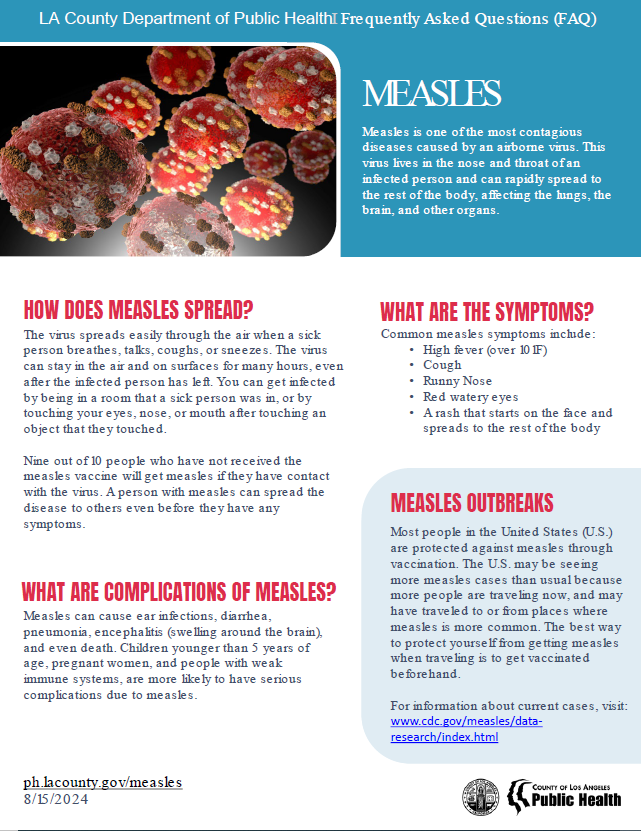
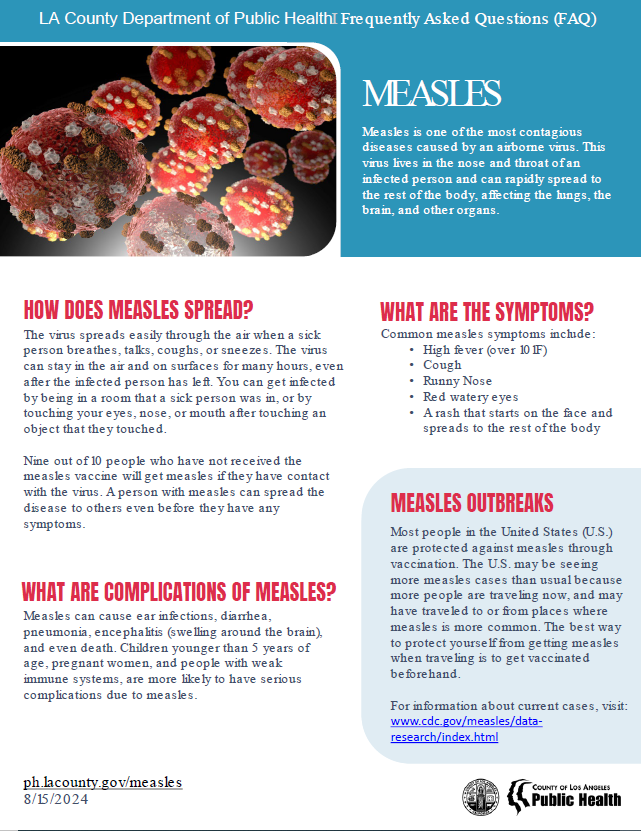
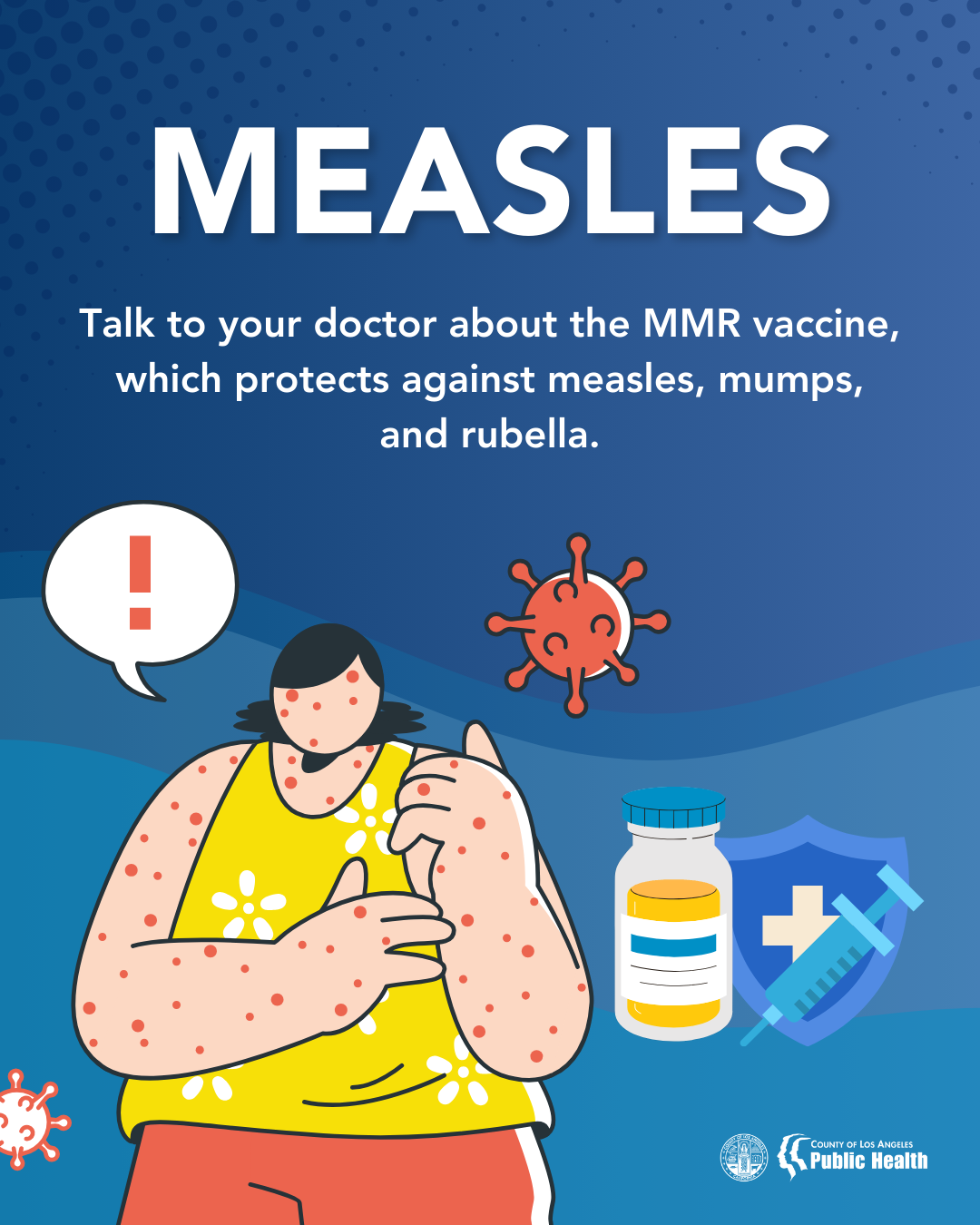
Vaccination is the most effective way to prevent measles.
See below for information on measles, where to get the vaccine, and multilingual fact sheets and resources.
Case counts updated through 4/30/2026.
Case count includes all confirmed measles cases reported to and investigated by Los Angeles County with rash onset in 2026, defined by the current national case definition established by the Council of State and Territorial Epidemiologists. In general, reporting is based on the case’s place of usual residence, not where exposure happened or the location of the case while infectious. For non-U.S. residents, a case is counted by the jurisdiction that is handling the case investigation.
Public notifications, including press releases, are issued on an as-needed basis for select cases based on public health risk when a confirmed measles case—regardless of jurisdiction—involves a public exposure in Los Angeles County that poses a risk of transmission to the broader community. This may include individuals who reside outside Los Angeles County and are not included in the county’s measles case count but were present in Los Angeles County while infectious.
Measles-Related Press Releases
For a complete listing of all press releases from Los Angeles County Department of Public Health, please visit our Communications and Public Affairs site.
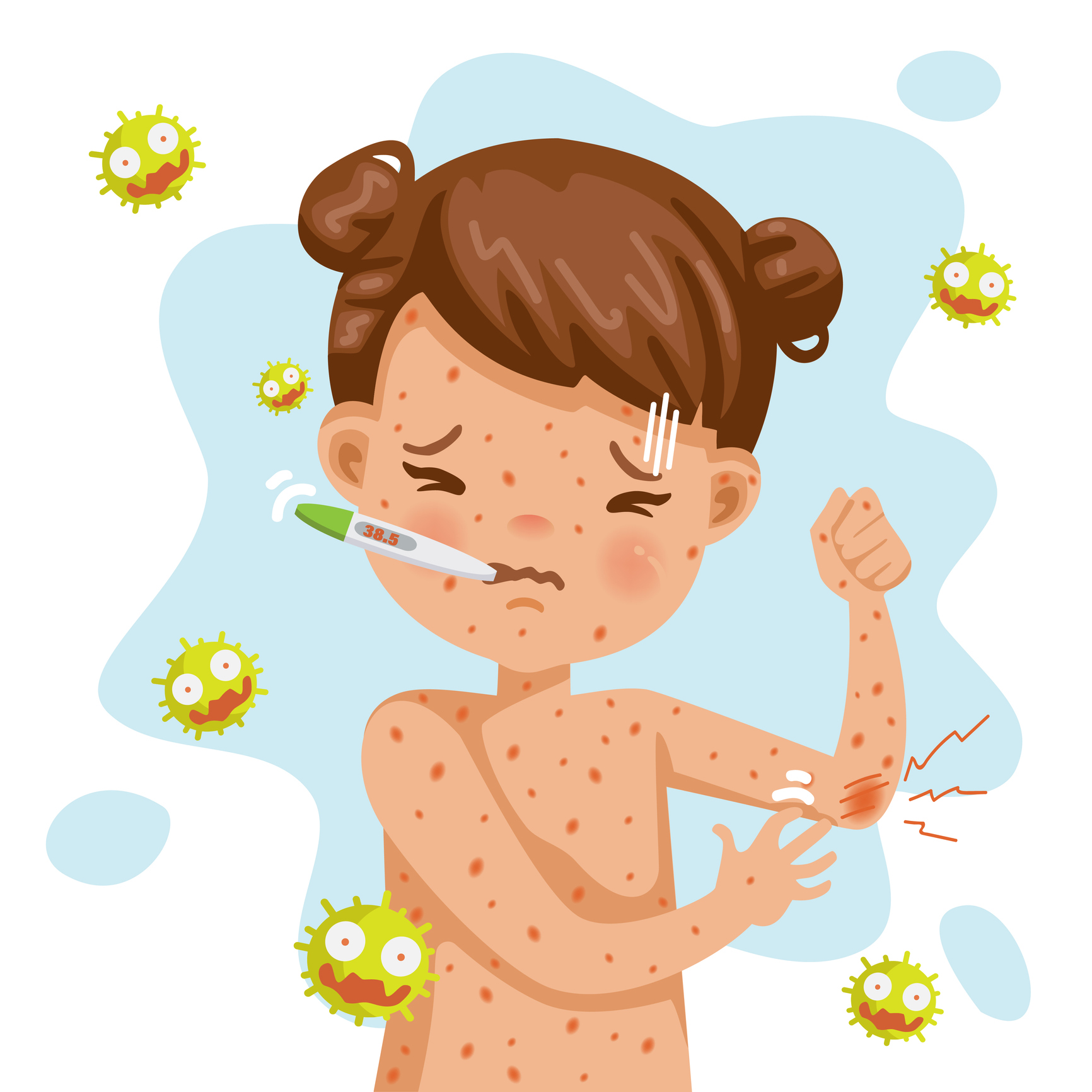
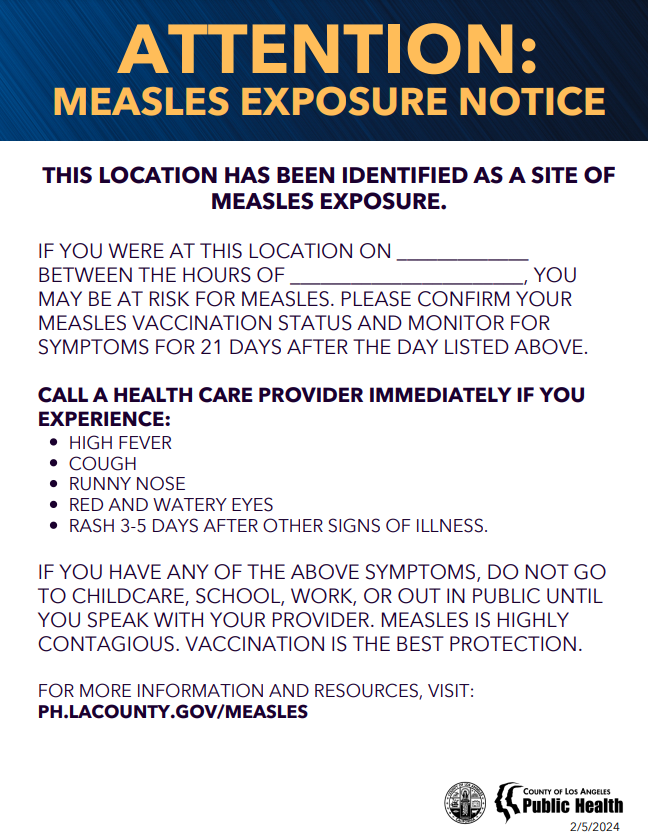
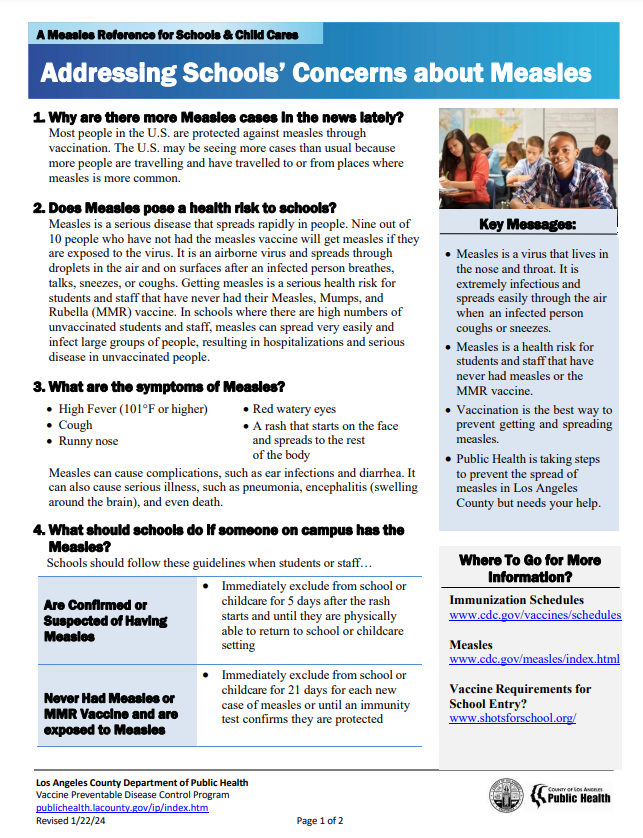
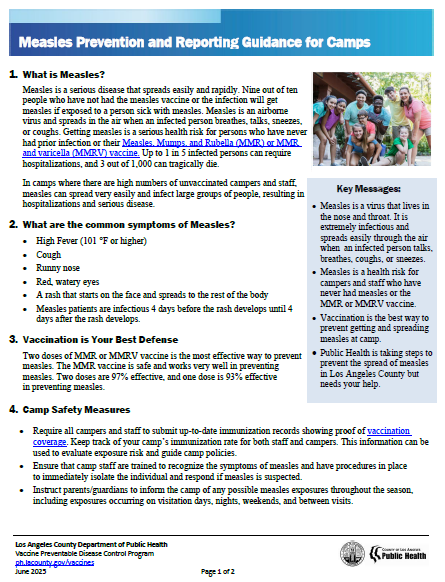
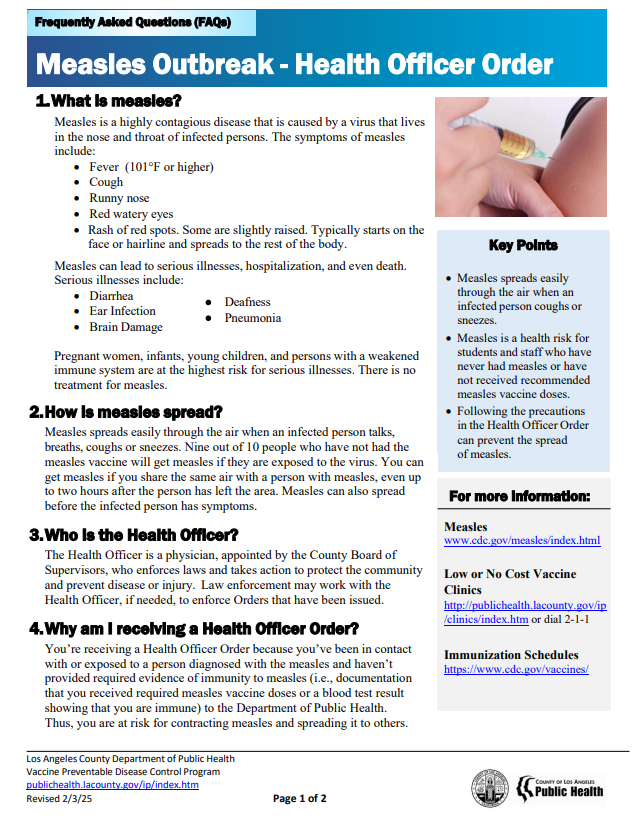
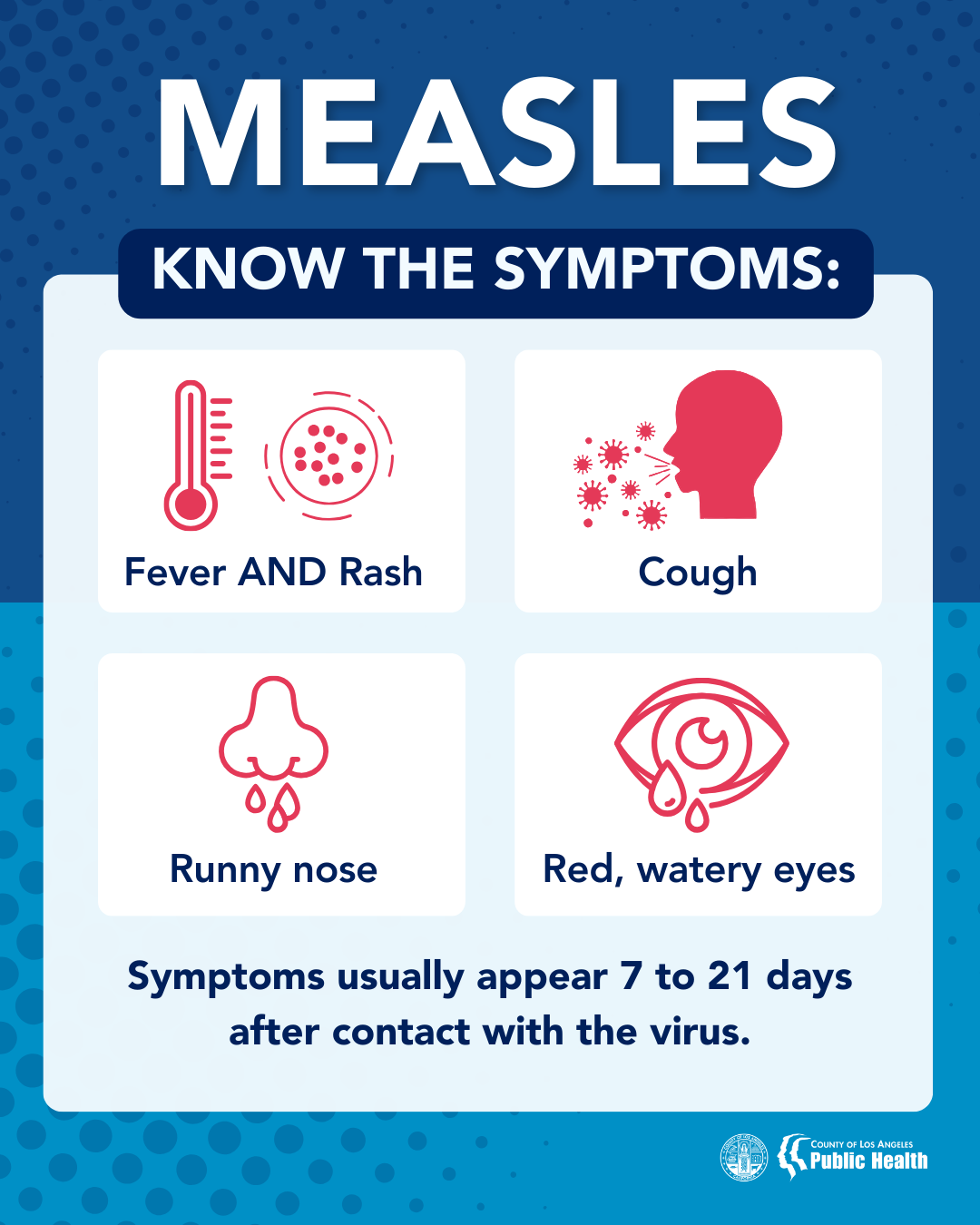
Common symptoms for measles include:
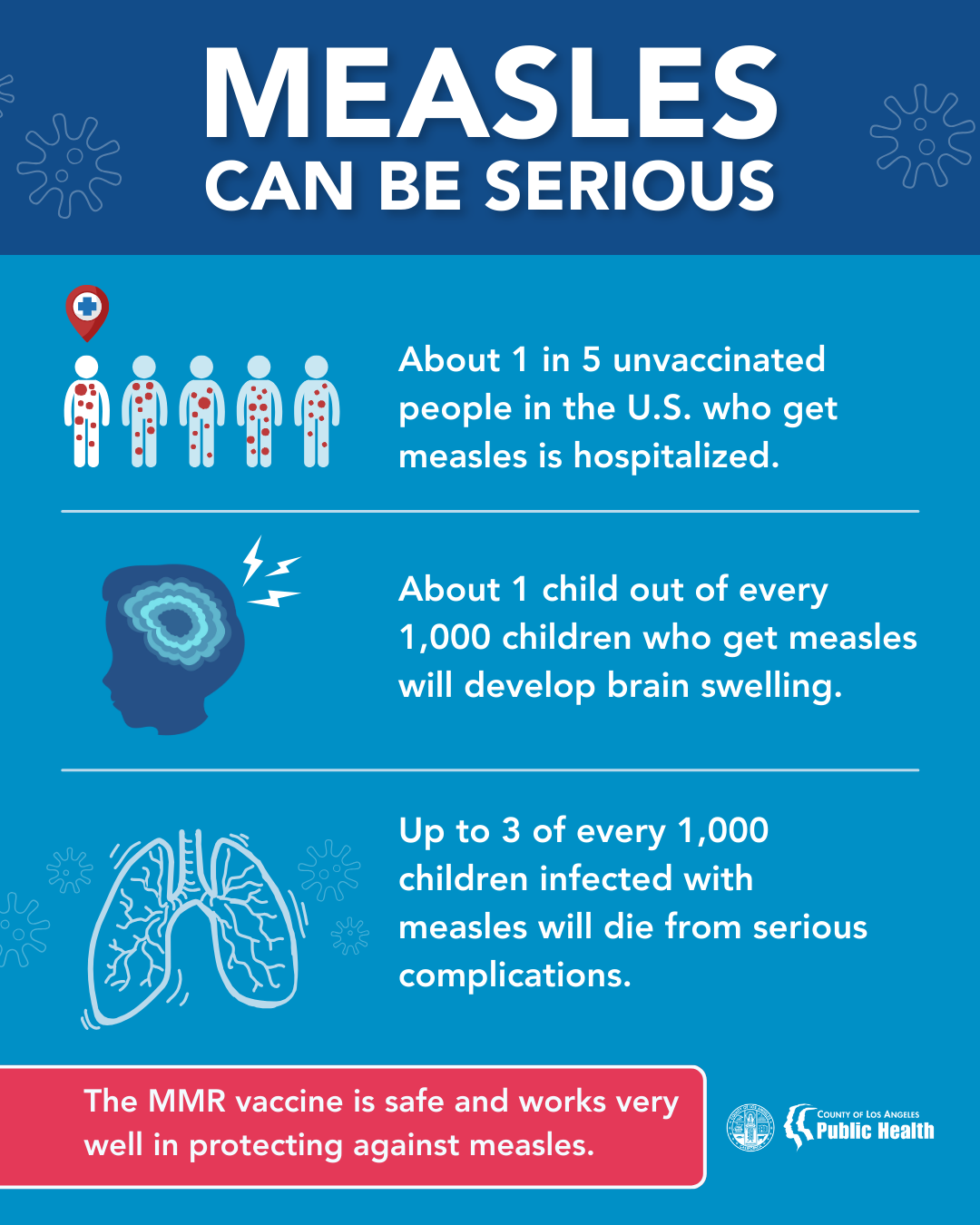
Measles can cause several health complications. Common complications include ear infections and diarrhea. About 1 in 5 people who are not vaccinated in the United States who get measles will be hospitalized. Serious complications include lung infection (pneumonia), dehydration, or swelling of the brain (encephalitis). In rare cases, the measles virus can affect the brain years after a child has recovered from illness, causing brain damage and death. Before widespread vaccines in the United States, hundreds of people died from measles every year.
Those who are more likely to have serious complications due to measles are:
If you are confirmed to have measles, you should stay at home away from other people until the 5th day after your rash started. This will help make sure that you do not spread measles to others.
If you are a health care provider whose patient has symptoms compatible with measles, call LACDPH immediately.
If you think you or your someone in your family may have measles because you or they have symptoms, have not been vaccinated against measles, and/or have been traveling:
If you think you have been exposed to someone with measles:
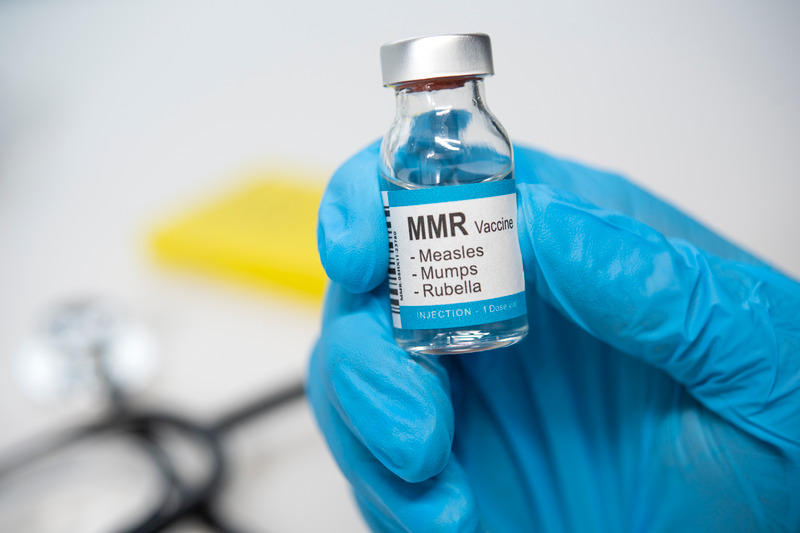
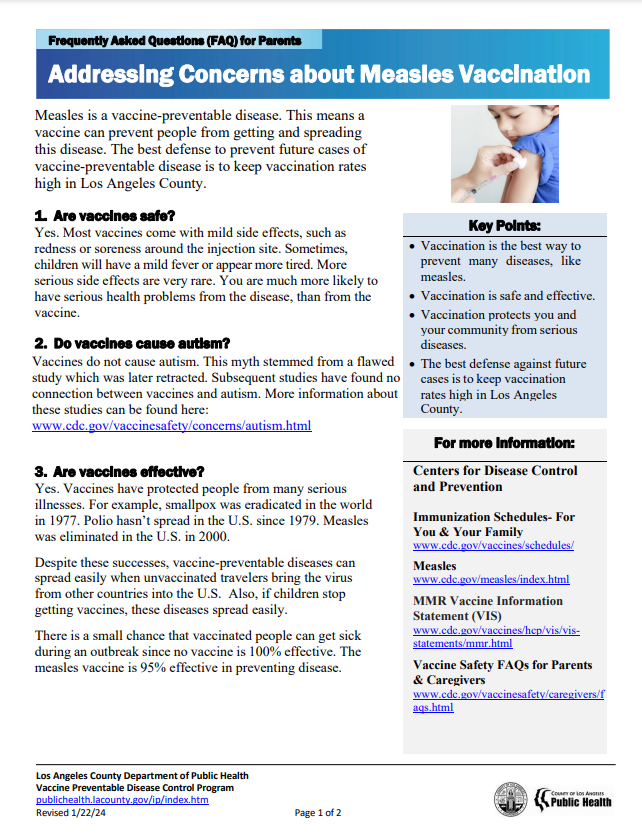
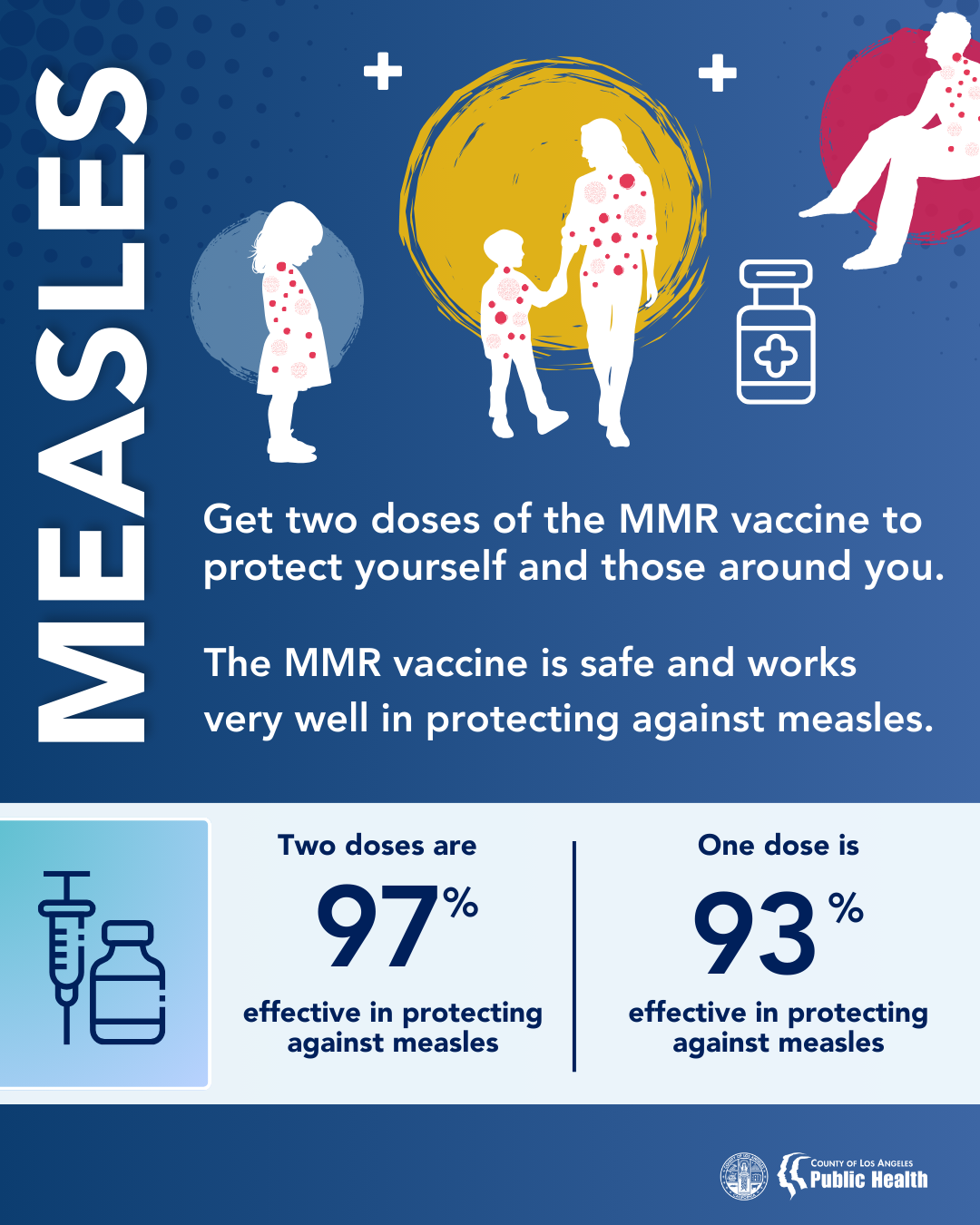
The best way to protect yourself, your family, and your community against measles is to get 2 doses of the measles-mumps-rubella (MMR) vaccine. The MMR vaccine is safe and works very well at preventing measles. Two doses are 97% effective, and one dose is 93% effective in preventing measles. The spread of measles can be prevented if at least 95% of community members have received 2 doses of the MMR vaccine.
Most people born or attending school in the United States get vaccinated when they are children. They receive their first dose at 12-15 months of age and their second dose at 4-6 years of age. If you did not receive vaccine as a child, you should get vaccinated against measles.
There are two types of measles vaccines:
Measles can be prevented with the MMR or MMRV vaccine. California requires that children receive at least one dose of the MMR or MMRV vaccine before starting school or childcare.
The American Academy of Pediatrics (AAP) recommends that children get two doses of MMR or MMRV vaccine:
Other vaccines can be given at the same time as the MMR or MMRV vaccine.
Who SHOULD get the vaccine:
Who should NOT get the vaccine:
Who should talk to their doctor before getting the vaccine:
Talk to your doctor if you have any of these health conditions or other precautions for vaccination.
If you are an adult who is planning international travel or traveling within the United States in known measles outbreak areas, you should get vaccinated against measles if you did not receive 2 doses as a child.
If your child is 6-11 months old and you’re planning international travel or traveling to an area in the United States experiencing an outbreak, you should speak to your child’s provider to get an early dose of vaccine against measles. After that, your child should follow the recommended schedule and get:
If you or your child are 12 months old or older and planning international travel or traveling to an area in the United States experiencing an outbreak, you should receive your first dose of vaccine against measles immediately. You can get a second dose as soon as 4 weeks after your first dose.
You should plan to be fully vaccinated against measles at least 2 weeks before you depart. If your trip is less than 2 weeks away and you're not protected, you should still get a dose of MMR.
Watch your health for 3 weeks after you return from your trip. Measles is very contagious and can spread to others through coughing and sneezing.
Call your doctor immediately if you or your child gets sick with a rash and fever. Tell your doctor you traveled abroad, and whether you have received MMR vaccine.
If you have insurance:
If you are uninsured or underinsured:
Locating Vaccine Clinics:
If you are unsure of your measles vaccination status, you can request a copy of your records.
To request your record:
If your vaccines are not listed, ask your doctor, pharmacist, or vaccine provider for a copy of your vaccine records. You can also ask them to add your vaccines to the California Immunization Registry (CAIR).
Other tips to find your records:
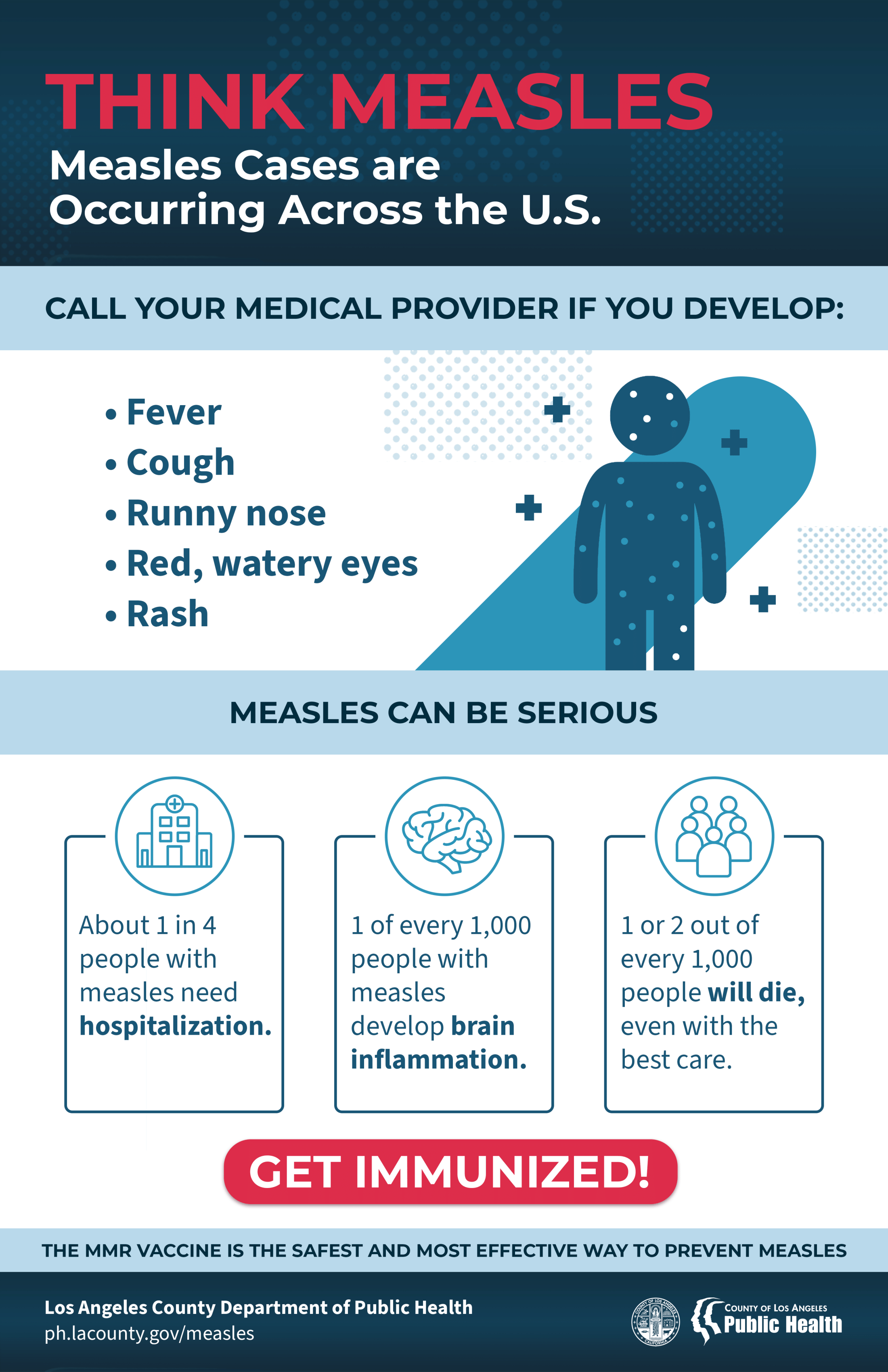
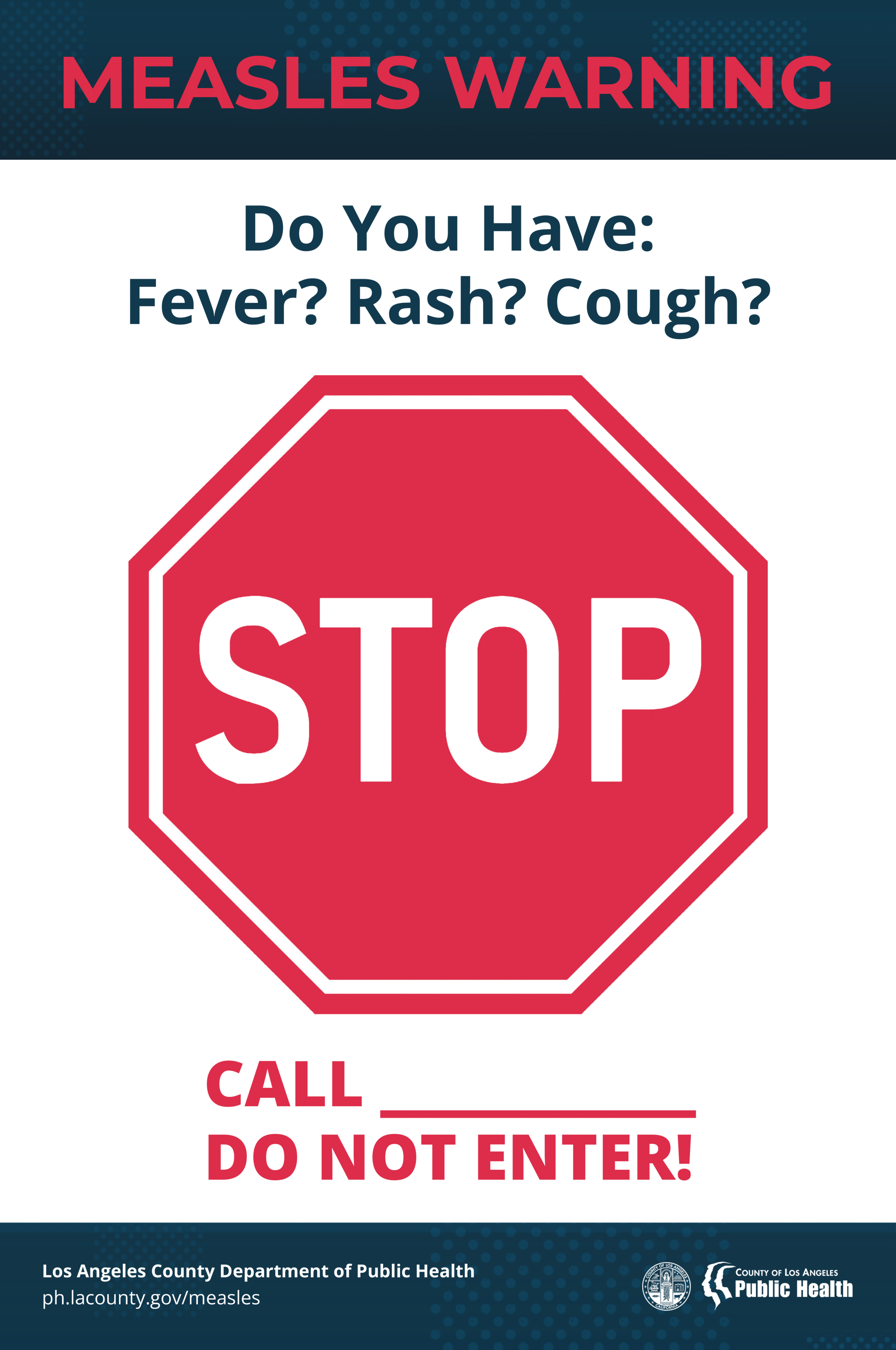
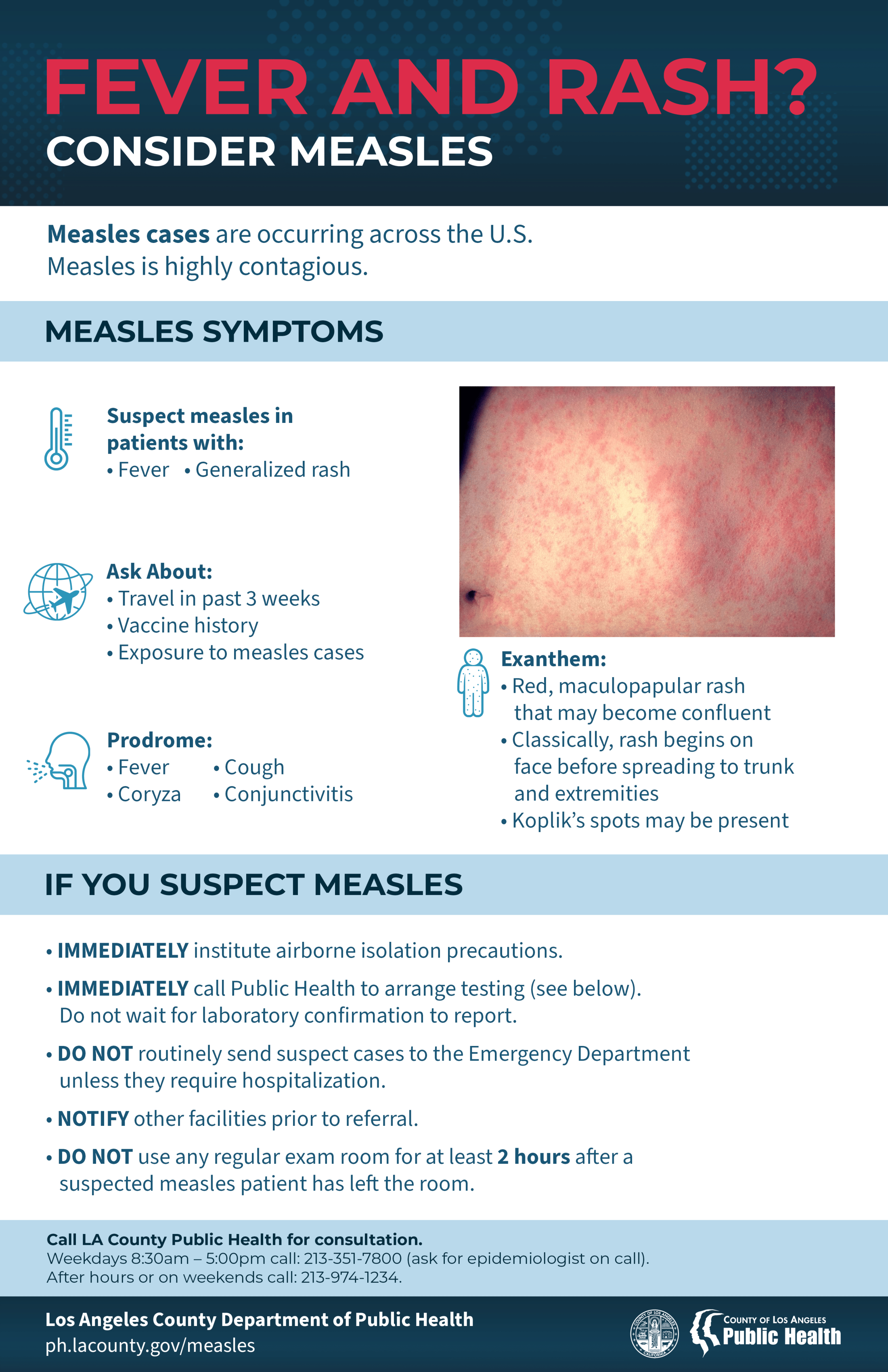
Posters in multiple languages (CDPH)
Highlights key symptoms of measles and various facts about the disease.
Download Poster
For facilities. Urges anyone with symptoms to pause & call before entering.
Download Poster
For providers. Highlights symptoms & steps for isolation, reporting, & infection control.
Download Poster
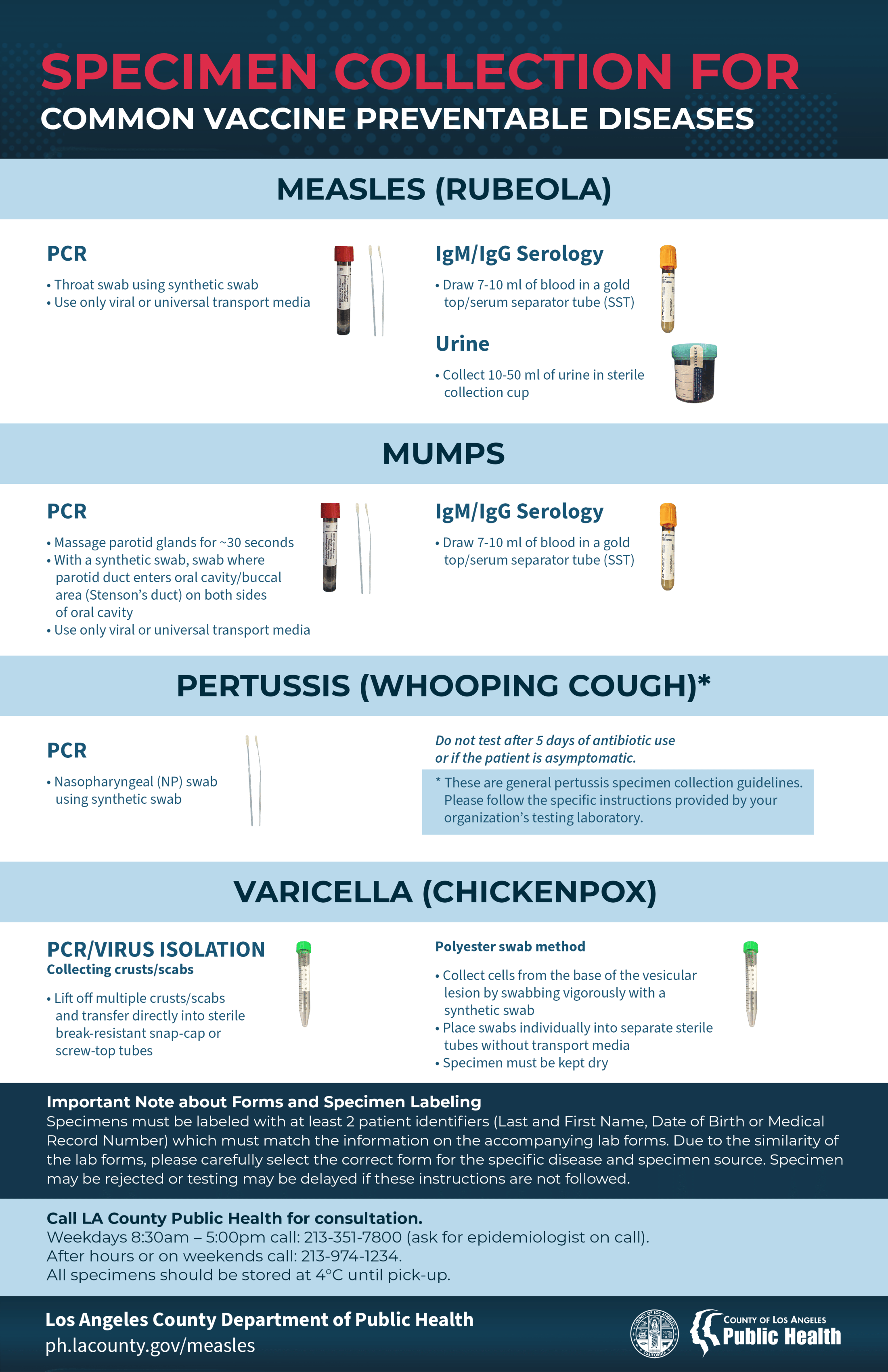
For providers. Provides guidance on measles specimen collection.
Download Poster
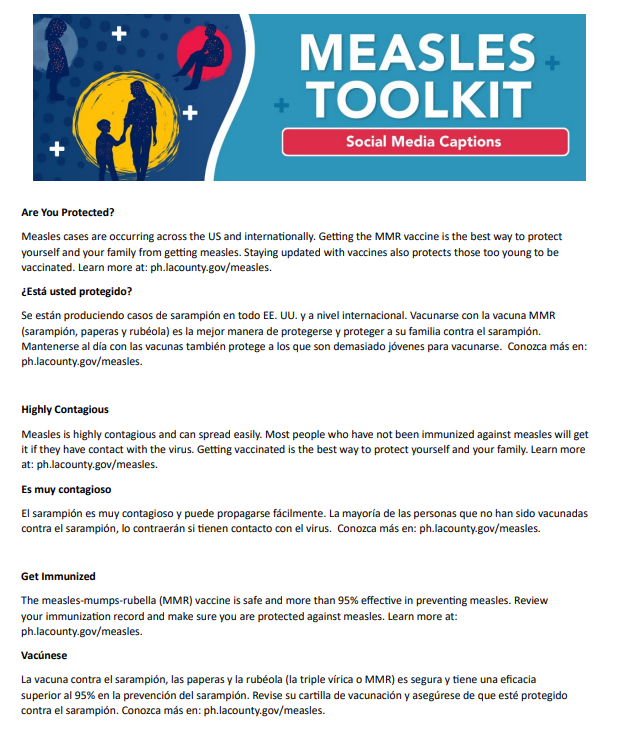
Suggested Messaging: Measles cases are occurring across the US and internationally. Getting the MMR vaccine is the best way to protect yourself and your family from getting measles. Staying updated with vaccines also protects those too young to be vaccinated. Learn more at: ph.lacounty.gov/measles.
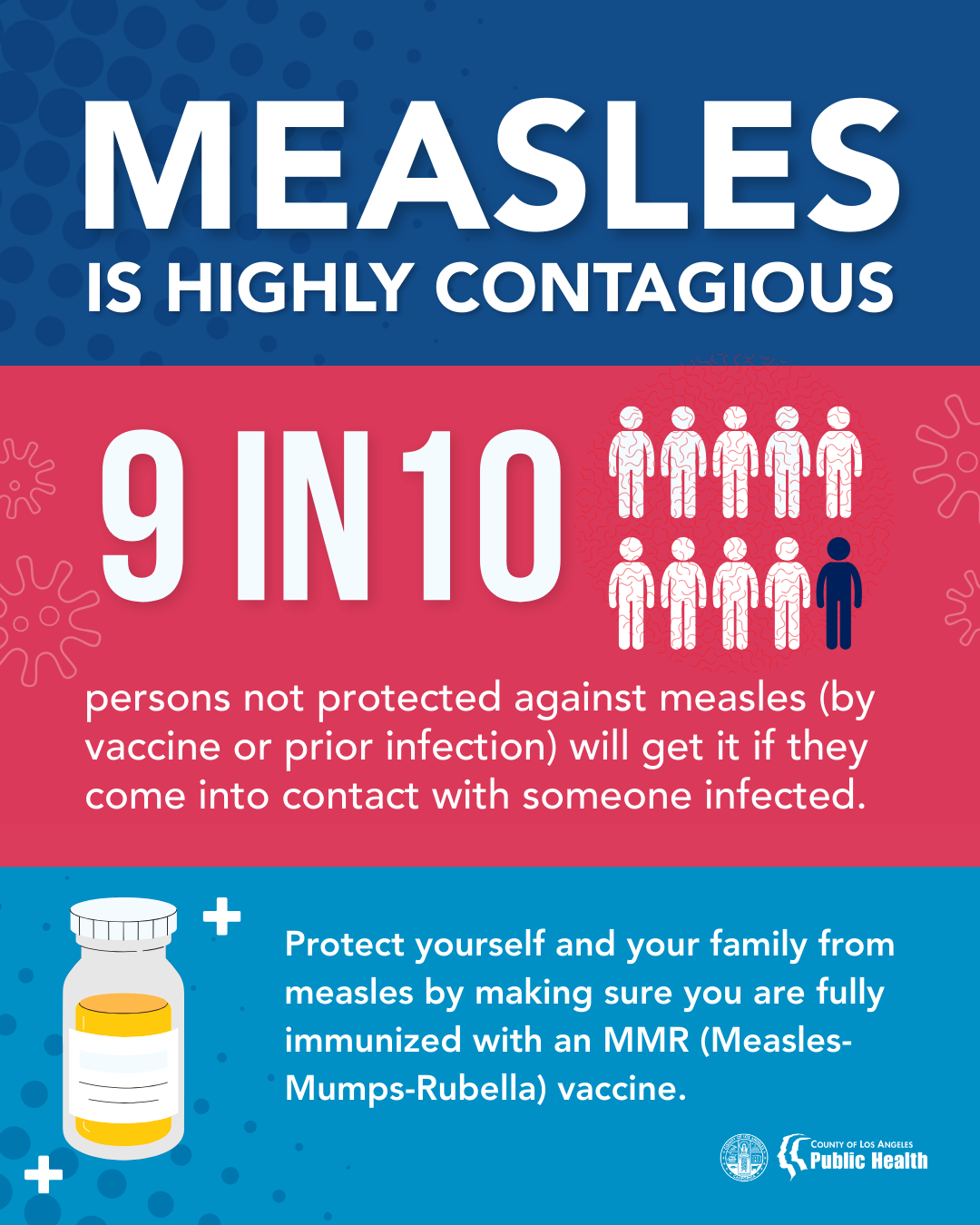
Suggested Messaging: Measles is highly contagious and can spread easily. Most people who have not been immunized against measles will get it if they have contact with the virus. Getting vaccinated is the best way to protect yourself and your family. Learn more at: ph.lacounty.gov/measles.
Suggested Messaging: The measles-mumps-rubella (MMR) vaccine is safe and more than 95% effective in preventing measles. Review your immunization record and make sure you are protected against measles. Learn more at: ph.lacounty.gov/measles.
Suggested Messaging: Stay informed! Knowing the symptoms of measles is crucial for early detection. Look out for: fever, cough, runny nose, red watery eyes, and rash that starts on the face + body. If you have symptoms or have been exposed to measles, call your doctor before going in. To learn more about measles visit: ph.lacounty.gov/measles.
Suggested Messaging: Measles is not just a childhood illness—it's a serious disease that can lead to severe complications, especially for children. Getting immunized against measles is the best way to protect yourself and others. Learn more at: ph.lacounty.gov/measles.
Do not wait for laboratory confirmation - report immediately by telephone for both confirmed and suspected cases upon clinical suspicion of measles. Public Health will guide you through the collection of specimens for testing and management of the patient under investigation as well as asymptomatic contacts for suspected or confirmed cases. Consultation is required before sending specimens to the Public Health Laboratory:
After the initial report, please send the patient’s medical records and any available immunization records and/or laboratory results via secure email to vpdc@ph.lacounty.gov or fax to 213-351-2782.
Laboratory confirmation is essential for all suspected measles cases. Healthcare providers should collect all specimens in consultation with VPDC. Follow step-by-step instructions for measles specimen collection and testing at the Checklist for Providers.
MMR and MMRV Vaccine Recommendations for Children and Adults
| Measles-Containing Vaccines and Brands | Number of Doses | Age for Primary Series | Recommended Age | Dose & Route | ||
|---|---|---|---|---|---|---|
| Dose 1 | Dose 2 | |||||
| M-M-R®II | PRIORIX® (Measles-Mumps-Rubella)* Merck | GlaxoSmithKline (GSK) |
2** | 12-15 mos | 4-6 yrs and/or at least 4 wks after Dose 1 | ≥12 mos** | 0.5 mL Subcutaneous (SQ) or Intramuscular (IM)***,† |
|
| ≥19 yrs | At least 4 wks after Dose 1 | |||||
| ProQuad® (Measles-Mumps-Rubella-Varicella)‡ Merck |
2 | 12-47 mos | 4-6 yrs and/or at least 3 mos after Dose 1 | 12 mos-12 yrs | 0.5 mL IM or SQ† | |
|
*M-M-R®II and PRIORIX® are fully interchangeable for all indications for which MMR vaccination is recommended. **An additional dose may be indicated in measles outbreak situations and travel where measles exposure is likely. Doses given before 12 months are invalid. May receive 1st dose of MMR 4 days before 1st birthday. ***PRIORIX® should only be given subcutaneously. †The preferred injection site in small children is the anterolateral aspect of the thigh. The posterior triceps aspect of the upper arm is the preferred site for older children, adolescents and adults. ‡ProQuad® is only licensed for use in children 12 months through 12 years of age. It may be given at the same time as other vaccines. ProQuad® is associated with a higher risk for fever and febrile seizures in children 12-23 months of age. |
||||||
MMR Vaccine Recommendations for Adults
In general, adults without presumptive evidence of immunity should receive at least 1 dose of the MMR vaccine, and certain adults may need 2 doses depending on their risk factors.
Pregnancy is a contraindication to vaccination with live virus vaccines, including MMR and MMRV. The American College of Obstetricians & Gynecologists (ACOG) recommends avoiding pregnancy for 4 weeks after receipt of MMR.
Administration Data: California healthcare providers are required to report data on all valid immunizations that they administer to their patients into the California Immunization Registry (CAIR) within 2 weeks of administration per AB 1797.
Administration Errors: Healthcare providers are strongly recommended to report all vaccine administration errors to the Institute for Safe Medication Practices.
Adverse Events: Healthcare providers are required to report any adverse event on the reportable events list to the Vaccine Adverse Event Reporting System (VAERS) per HR 5546.
Storage and Handling: For general recommendations and guidance access the Vaccine Storage and Handling Job Aids.
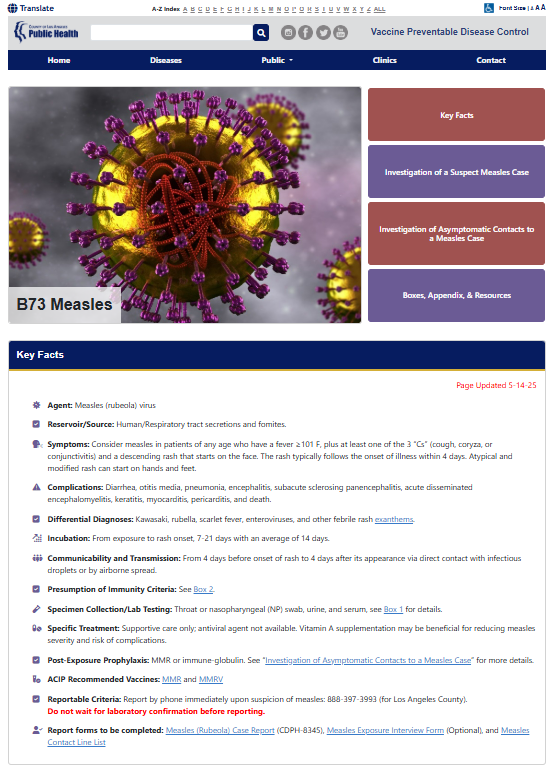
Provides important information on reporting, procedures, recommendations, and links to LAC DPH investigation forms.
Webpage
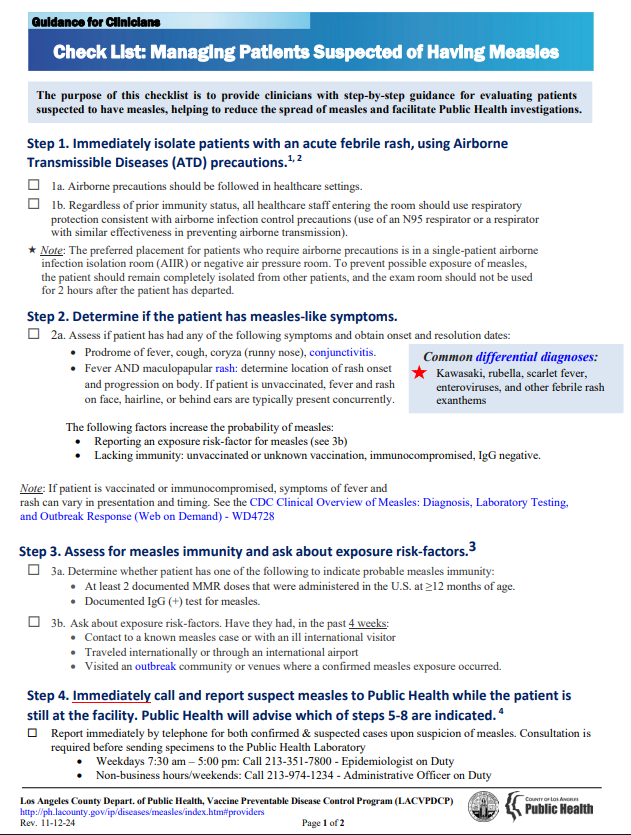
A checklist to provide clinicians with step-by-step guidance for evaluating patients suspected to have measles, helping to reduce the spread and facilitate Public Health investigations.
Checklist
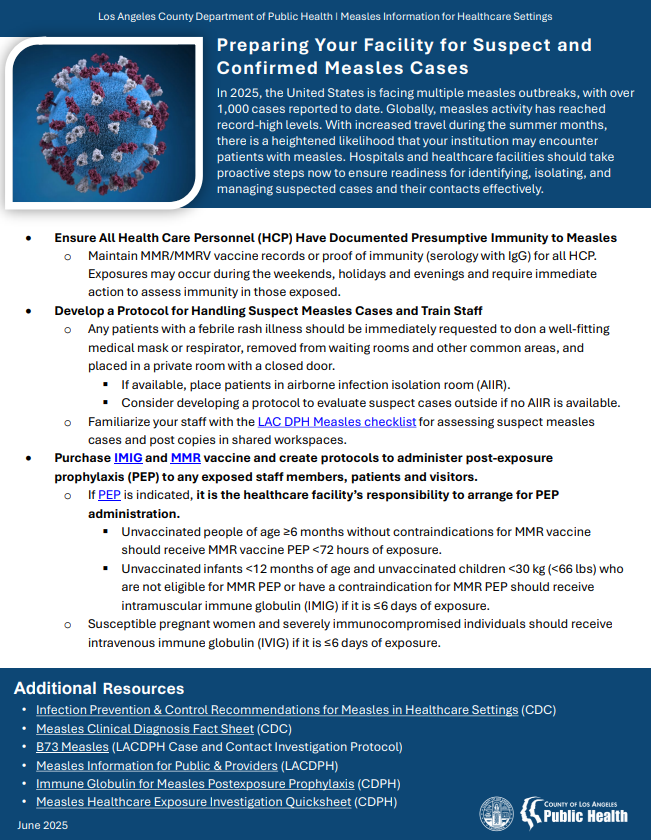
Guidance for preparing hospitals and healthcare facilities for suspect and confirmed measles cases.
Guidance Document
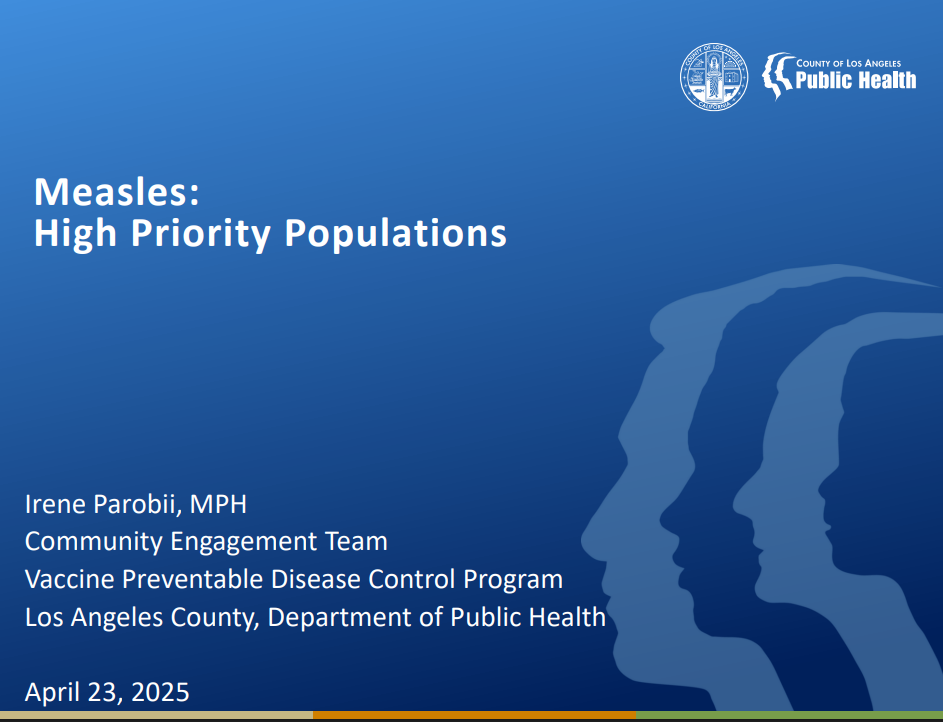
A presentation from LAC DPH on measles high priority populations and strategies/considerations to improve vaccine confidence and uptake.
Presentation (PDF)
LAC DPH
CDPH
Additional Resources