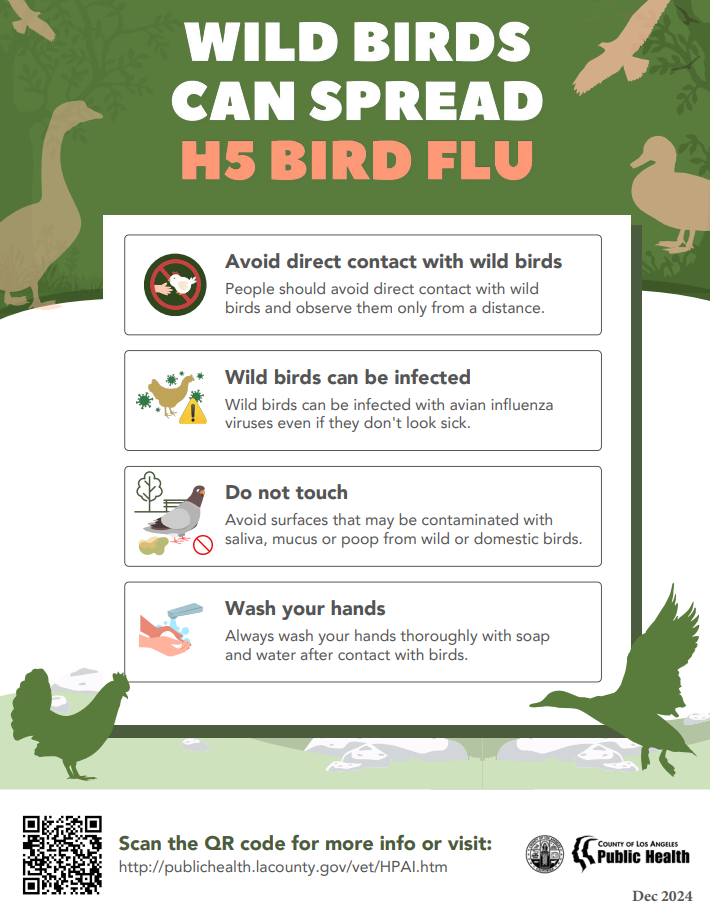
H5 Bird Flu in Animals
H5 Bird Flu, Current Situation
Confirmed Animal H5 Bird Flu Cases in LA County reported during the 2026–2027 Season (starting October 1, 2026)
| Wild Birds | Cats |
|---|---|
| 0 | 0 |
The risk of H5 bird flu spreading to people in LA County remains. Public Health is closely monitoring the situation.
This page contains information for people in Los Angeles County who work with animals and may be at increased risk for H5 bird flu, including veterinarians, animal shelter workers, farm workers, backyard poultry owners, and others with professional and vocational exposure. For more information, visit:
Report Sick or Dead Birds or Animals Right Away
- Suspect H5 bird flu? Call 2-1-1 to reach your local animal control agency and report sick or dead wild birds, poultry, or other animals. They may be able to collect certain animals for H5 bird flu testing.
- Report to public health. Include whether animal control has been contacted.
- Call California Department of Food and Agriculture (CDFA)’s Sick Bird Hotline at 1-866-922-BIRD (2473) to report sick birds in your flock.
- If your pet is sick, contact your veterinarian.
H5 Bird Flu in LA County
- LA County Public Health is testing for bird flu in wild birds, domestic birds, and select mammals.
- We collaborate with animal control, wildlife rehabilitation facilities, private practice veterinarians, the LA Zoo, and other LA County agencies to test a wide range of wild and domestic animals, including wild birds, poultry, cats, dogs, skunks, raccoons, coyotes, sea lions, and seals.
- We work closely with the California Department of Food and Agriculture (CDFA) and industry stakeholders to protect both human and animal health.
Click to learn more about what Public Health is doing to monitor and respond to H5 Bird Flu in LA County
Wild Birds / Poultry
H5 bird flu has been detected in wild birds across LA County since September 2022.
Infected birds may shed virus through saliva, respiratory droplets, and feces. Birds can become infected through direct contact with the virus. Poultry and wild birds may present with no signs or exhibit swelling, discoloration, respiratory issues, neurological symptoms, or sudden death.
Dairy Cattle
H5 Bird Flu was first detected in U.S. dairy cattle in March 2024 and in California cattle in August 2024. LAC DPH partners closely with local dairy producers to monitor and prepare for prompt intervention following possible exposure to H5 bird flu.
The virus is shed in animal secretions, and it is present at high levels in the milk of infected animals. Risk is highest for those in close contact with infected animals or unpasteurized milk.
For the latest confirmed detections of H5 bird flu in U.S. dairy cattle, visit USDA APHIS’s HPAI detections in livestock page .
Cats
H5 bird flu has been confirmed in multiple pet cats across several LA County households. Illness and death followed consumption of raw milk, raw pet food, or raw poultry. Many of these products were later recalled due to suspected or confirmed H5 bird flu contamination. See Products Linked to H5 Bird Flu.
Cats, including pets and big cats like lions and tigers, are particularly susceptible to H5 bird flu, often becoming severely ill and dying after infection. Outdoor access, raw feeding, and proximity to infected animals increase the risk of infection in cats.
Symptoms of H5 bird flu infection in cats may vary, including loss of appetite, tiredness, breathing problems, liver problems, seizures, and vision problems.
To protect your pets, keep them away from wildlife, including wild birds, and avoid feeding raw or undercooked meat and poultry products, raw milk or dairy products, and raw pet food diets.
Veterinarians or pet owners can report suspected cases of bird flu in cats or pets by completing this report form, calling Veterinary Public Health (VPH) at 213-288-7060 (Monday to Friday, 8am - 5pm), or emailing vet@ph.lacounty.gov. Testing may be available after consultation with a public health veterinarian. Be sure to gather information about the pet's dietary history (including raw dairy or raw poultry/meat) and possible exposures to bird flu before contacting VPH.
Headlines:
- Los Angeles cat H5N1 deaths prompt new warning about raw pet food Read More. (September 2025)
- Northwest Naturals of Portland Voluntary Recall of Northwest Naturals Brand 2lb Feline Turkey Recipe Raw and Frozen Pet Food Due to HPAI Contamination: Read more (December 2024)
- Bird flu has killed 20 big cats including cougars at a U.S. wildlife sanctuary: Read more (December 2024)
- FDA Outlines Ways to Reduce Risk of HPAI in Cats: Read more (December 2024)
Other Mammals
H5 bird flu has infected wild and captive mammals, including foxes, raccoons, bears, and seals.
LAC DPH partners with local shelters and wildlife rehabilitation organizations to identify sick or dead animals that may be infected with H5 bird flu and conduct surveillance testing.
Clinical signs vary by species but often include neurological symptoms, respiratory distress, and sudden death.
USDA APHIS publishes a list of detections of H5 bird flu in wild and captive animals in the United States.
Safety information
People who work with animals are at higher risk of exposure to H5 bird flu.
This includes professional exposures for individuals who work at veterinary practices, shelters, animal control, or farms. It also includes recreational exposures, such as people with backyard flocks.
Review the information below to understand how bird flu can spread to people from animals and how to reduce the risk.
More about animal exposure risks & symptomsEmployers and individuals can take steps to reduce potential exposure to H5 Bird Flu.
- The virus can be shed by sick animals through saliva, feces, mucus, and other bodily fluids, including milk. Direct exposure carries the greatest risk.
- The virus can remain infectious on surfaces.
- Humans and animals may be infected when the virus is inhaled or comes into contact with the eyes, nose, or mouth.
- Infection may also occur through consuming contaminated products like unpasteurized milk or undercooked meat.
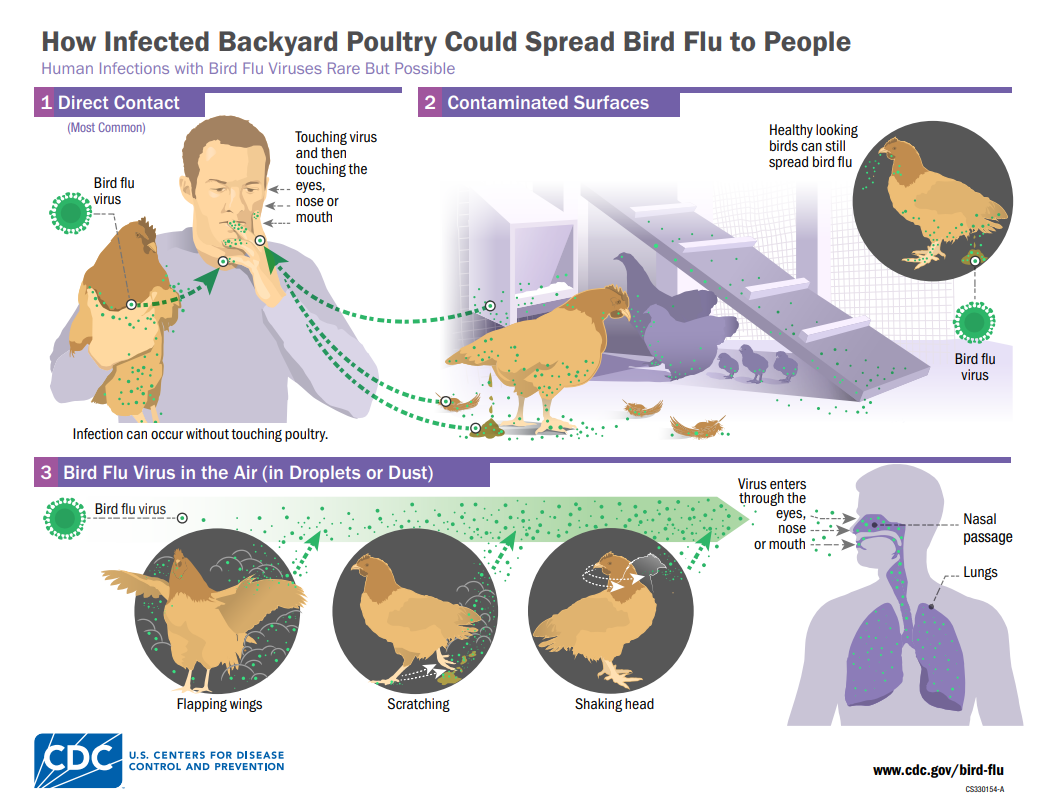

Follow these steps to reduce the risk of H5 bird flu transmission when working with animals or contaminated environments.
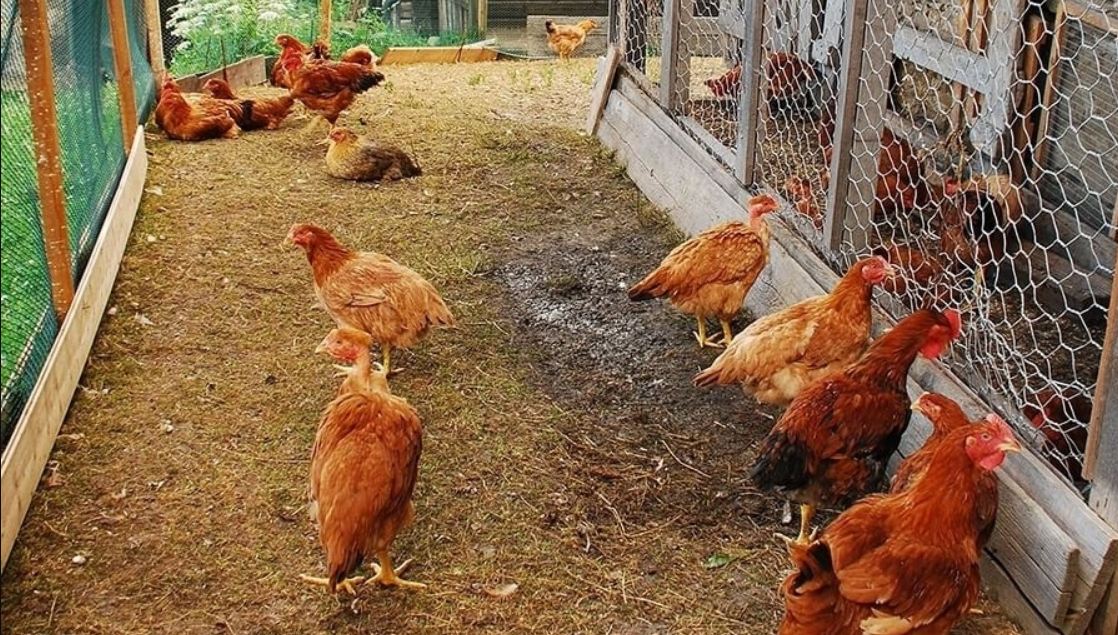
Implement strong biosecurity measures to limit virus introduction and spread.
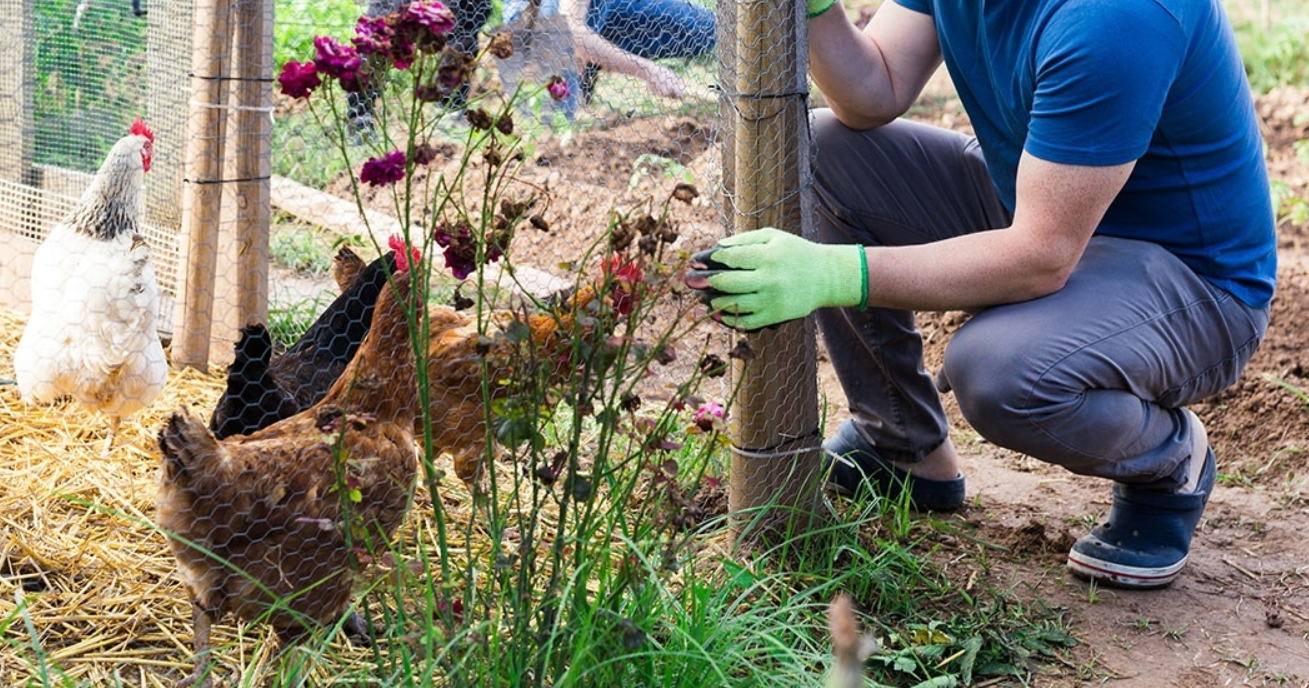
Isolate sick animals as much as possible to reduce exposure to other animals and people, including staff.
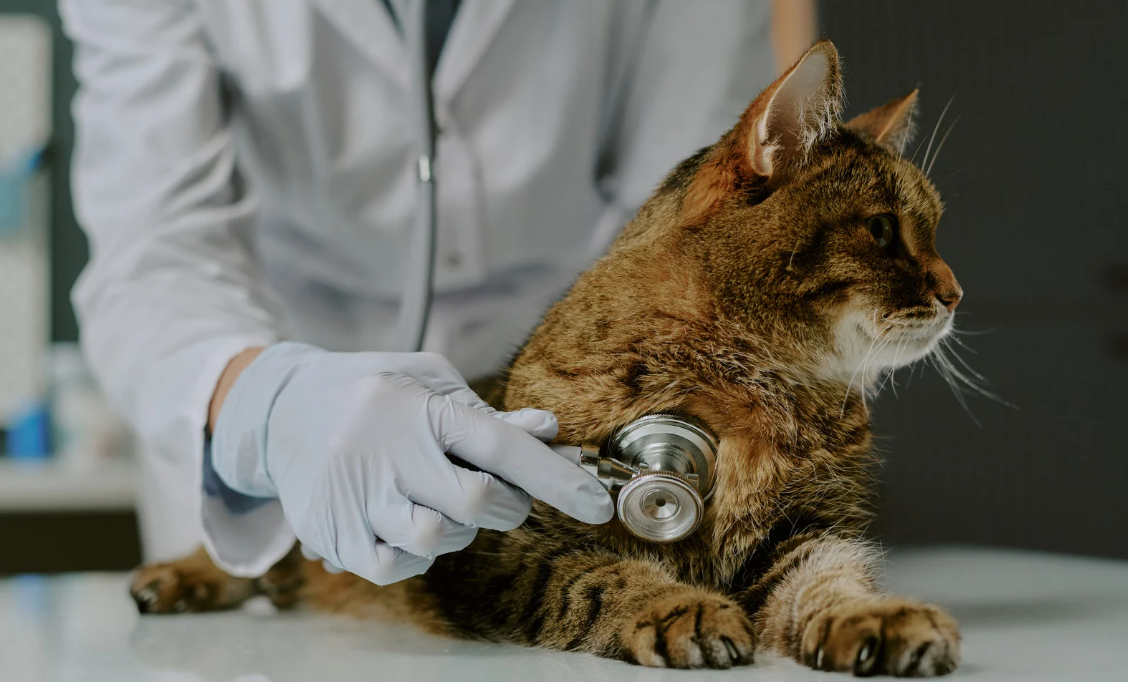
Avoid direct, unprotected contact with animals suspected or confirmed to have H5 bird flu, including carcasses, animal waste, raw milk, contaminated surfaces, or water.
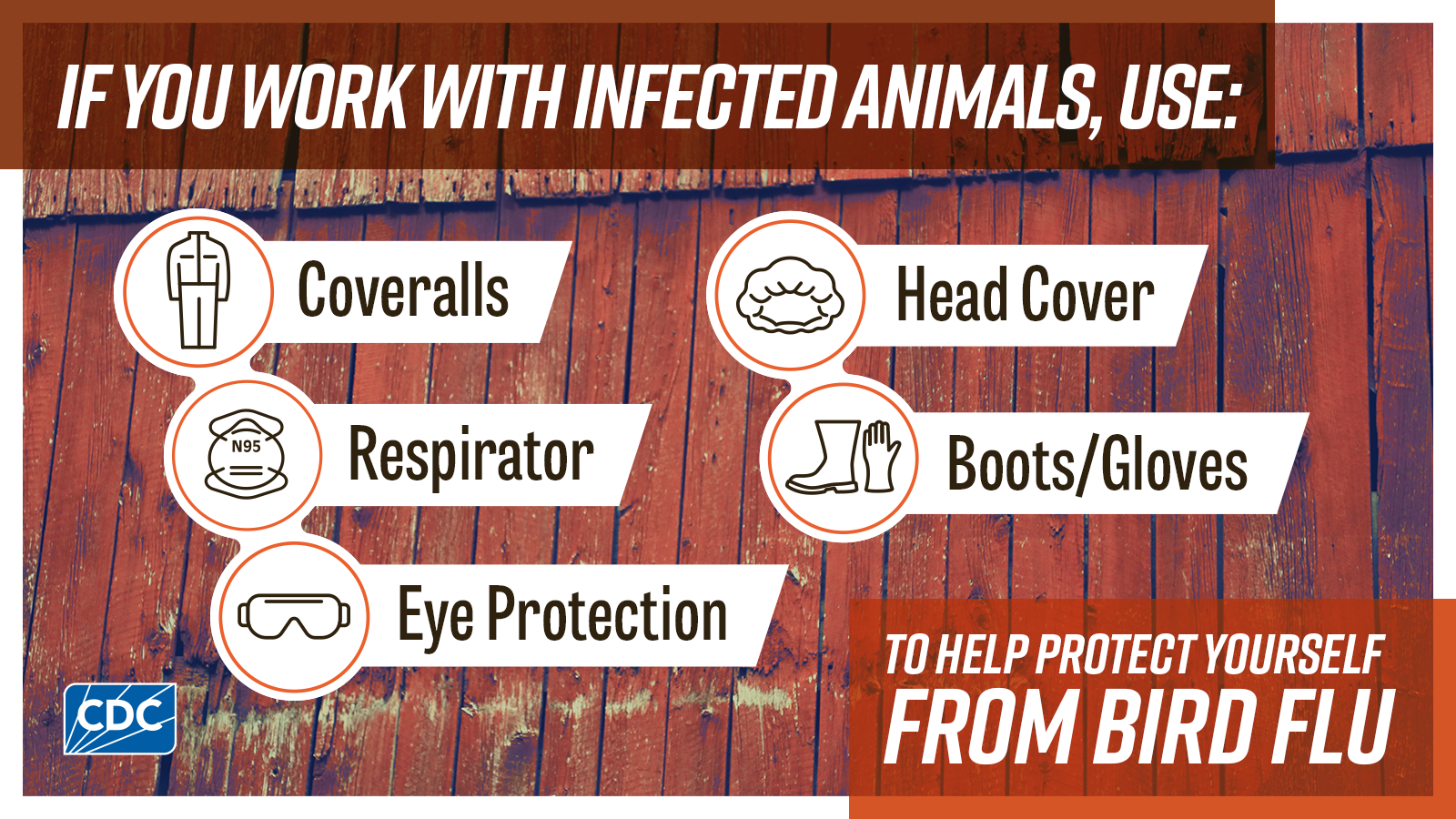
Use recommended PPE:
- NIOSH-approved respirator (e.g., N95)
- Disposable gloves
- Safety goggles or face shield
- Disposable or fluid-resistant coveralls/aprons
- Rubber boots or disposable boot covers
- Disposable head or hair cover

Put on and remove PPE in clean, separate areas to prevent contamination.

Clean and disinfect contaminated surfaces and reusable PPE (such as rubber boots) using EPA-approved disinfectants.
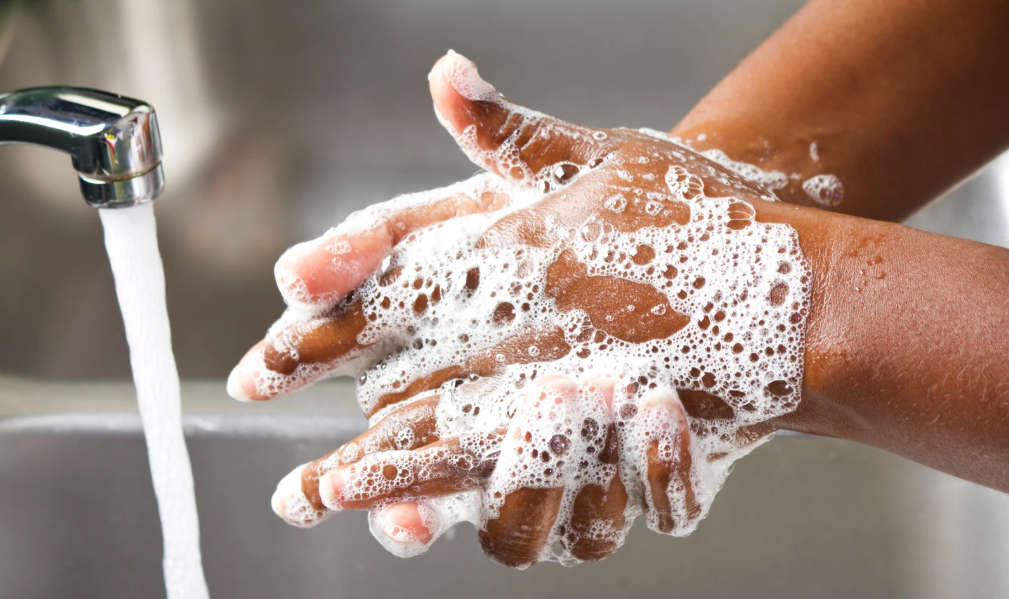
Wash or sanitize hands immediately after removing PPE. Do not touch your face while wearing PPE.
Additional Resources
H5 bird flu is most commonly found in wild birds and poultry, but it can infect mammals. Cats and dairy cows appear especially susceptible.
Veterinarians evaluating sick pets should obtain a thorough dietary history, including exposure to raw meat, raw poultry, or raw dairy products. Also assess for outdoor access, exposure to backyard flocks, or contact with wild animals.
If you suspect H5 bird flu, contact Veterinary Public Health by calling (213) 288-7060 or emailing vet@ph.lacounty.gov.
Guidance & Report Forms
- LAC DPH: Guidance for Veterinary Practices & Reporting Form
- LAC DPH: HPAI Quick Reference for Animal Control, Shelters, and Veterinarians
See the additional resources below for clinical signs, treatment, and outbreak protocols.
Additional Resources
- AVMA: Avian Influenza – clinical signs, testing, and treatment options
- CDC: Considerations for Veterinarians Handling Cats Exposed to H5N1
Products Linked to H5 Bird Flu Updated September 5, 2025
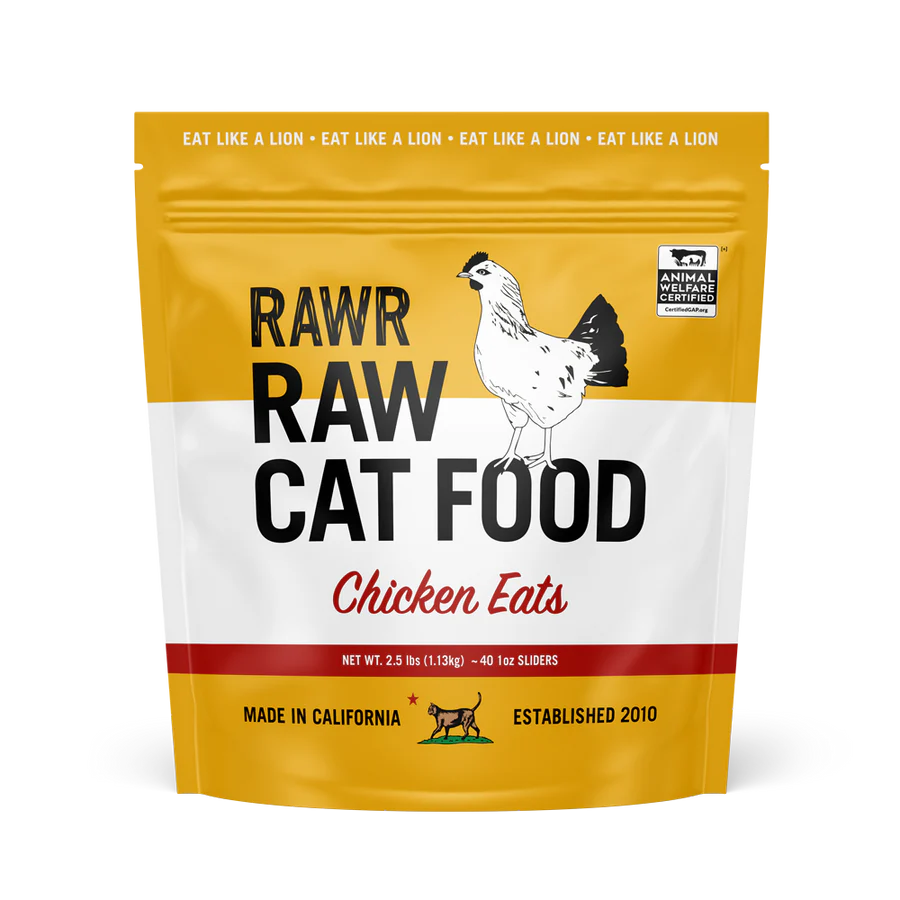
RAWR Raw Cat Food
Announcement date: 9/3/25FDA has found that certain lots of RAWR Raw Cat Food Chicken Eats sliders tested positive for H5N1. Affected lots are Lot CCS 25 077 (Sell By 09/18/26) and Lot CCS 25 093 (Sell By 10/03/26).
Product Description: RAWR Raw Cat Food Chicken Eats Sliders
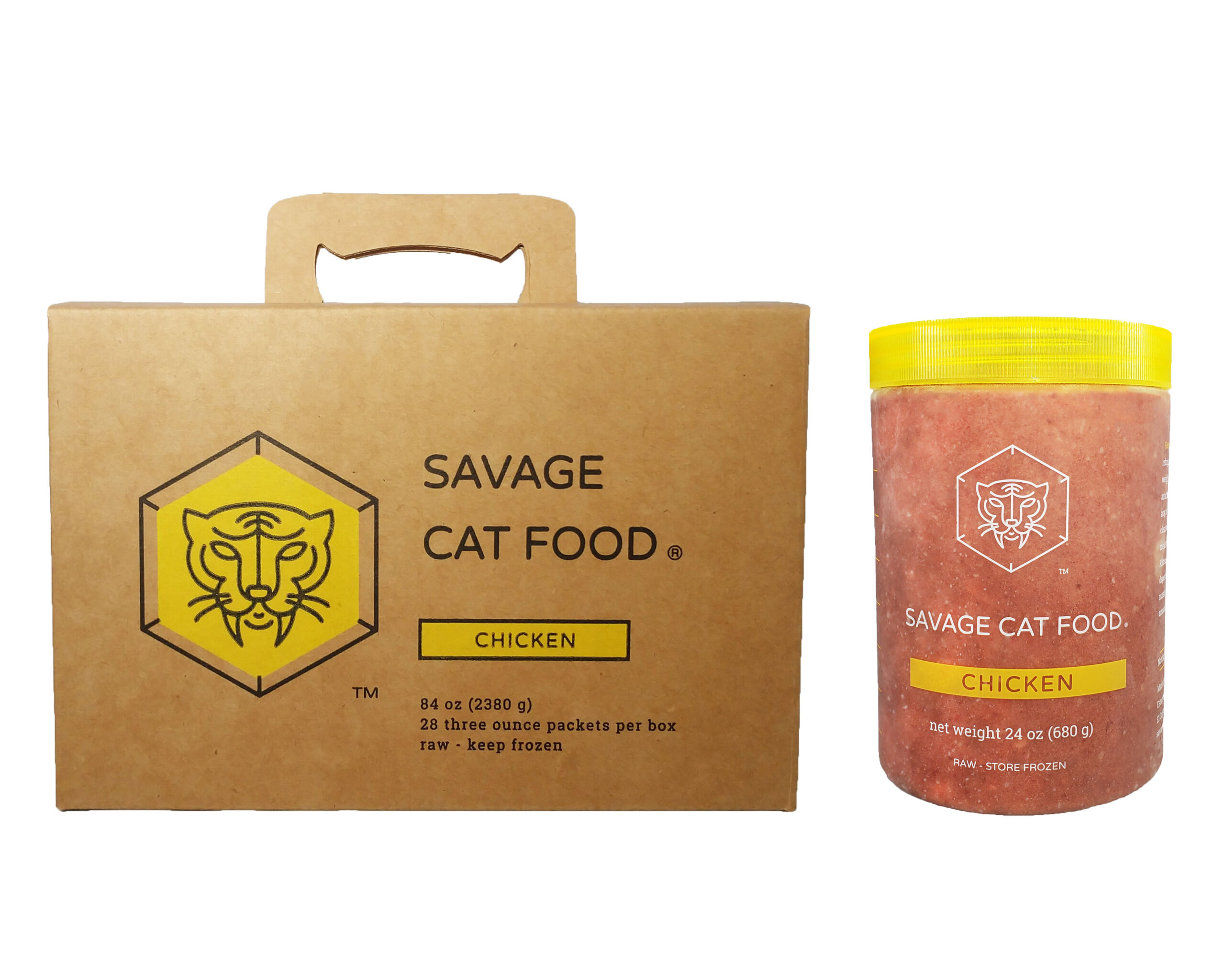
Savage Pet
*Recalled
Product
Announcement date: 3/15/25
Affected products have the lot code / best by date 11152026 and were
distributed to retailers in California, Colorado, New York,
Pennsylvania, and Washington.
Product Description: Savage Cat Food Chicken – Large and Small Boxes
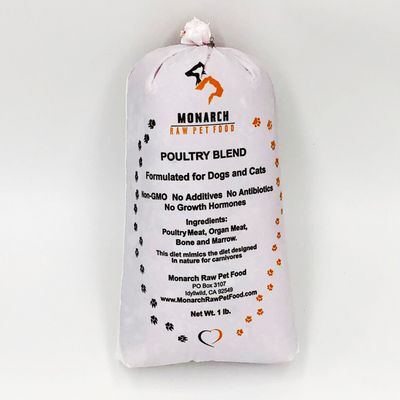
Monarch Raw Pet Food
Announcement date: 12/31/24
Affected products are sold at several farmers markets in California.
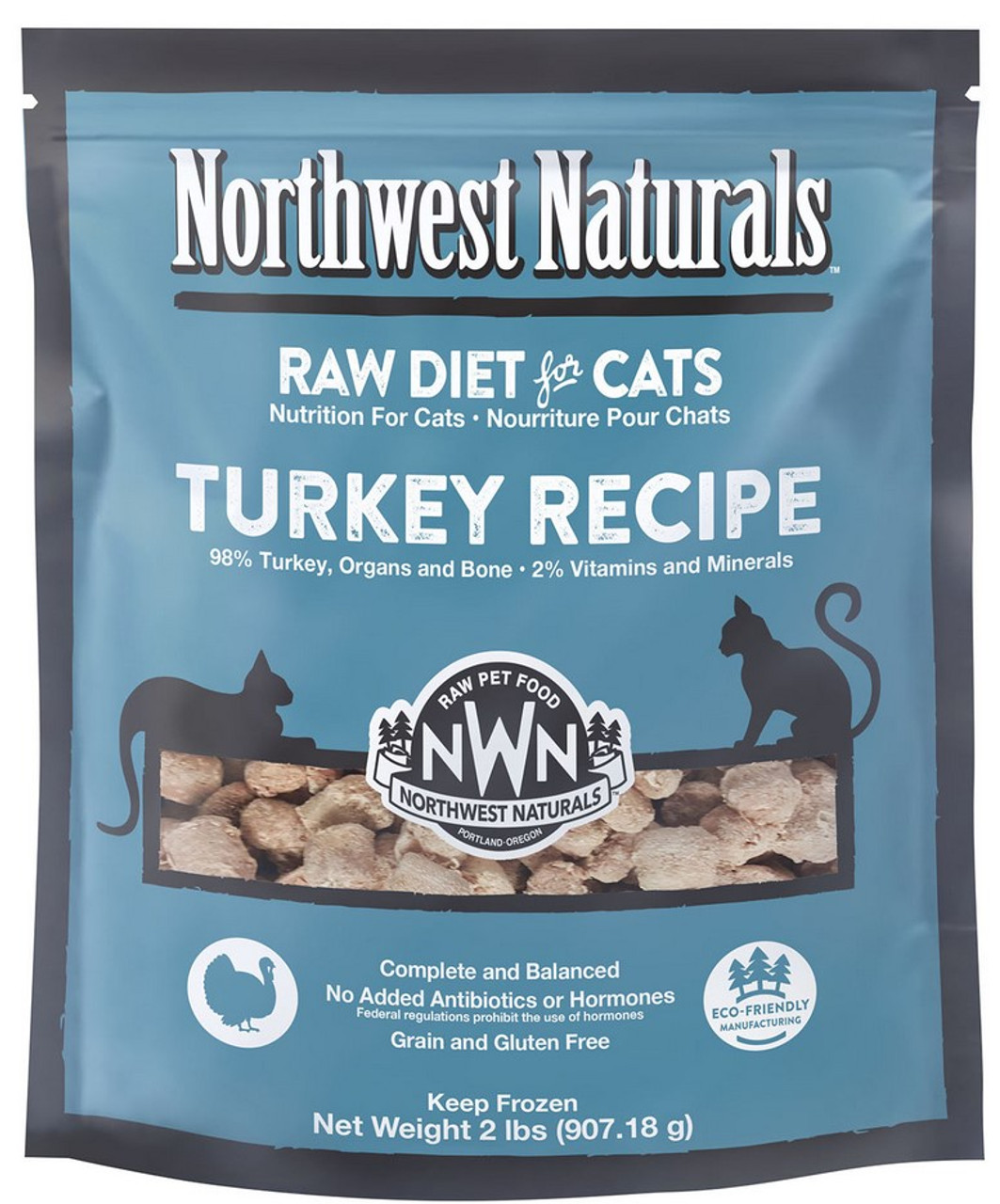
Northwest Naturals Feline Turkey Recipe
Announcement Date: 12/24/24
Affected products "Best if used by" dates: 05/21/26 B10 and 06/23/2026 B1
Product Description: 2lb Feline Turkey Recipe Raw & Frozen Pet Food.
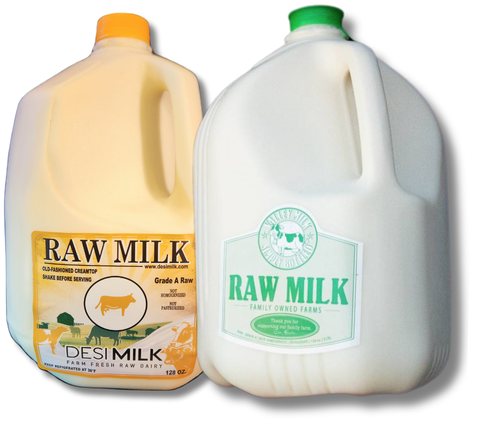
Valley Milk Simply Bottled & DESI Milk Raw Cow Milk
Announcement Date: 12/14/24
Affected product expiration dates: DEC 23 2024 through DEC 30 2024
Product Description: Raw cow milk sold in quart, half-gallon, and gallon plastic jugs.
Resources & News
State & Federal Resources
LA County Guidance
LA County Press Releases
- Public Health Warns Against Feeding Pets Raw Food Following H5 Bird Flu Virus Detection (December 31, 2024)
- Public Health Warns Against Feeding Pets Raw Food Following H5 Bird Flu Virus Detection (December 24, 2024)
- Public Health Confirms Human H5 Bird Flu Case in LA County (December 23, 2024)
- Public Health Warns Against Consuming Raw Milk Following Additional Detections of H5 Bird Flu Virus (December 19, 2024)
- UPDATED: Confirmed H5 Bird Flu Detected in Los Angeles County Cats That Consumed Recalled Raw Milk - Public Health Investigating Additional Possible Cases in Cats (December 18, 2024)
LA County Updates
- H5 Bird Flu confirmed in Los Angeles County in another domestic cat that consumed commercially available raw pet food (September 25, 2025)
- H5 bird flu confirmed in four domestic cats that consumed recalled raw milk, and in one cat that consumed commercially produced raw pet food. (December 20, 2024)
- H5 bird flu suspected in two domestic cats that tested Influenza A positive and consumed recalled raw milk. (December 12, 2024)
- Highly Pathogenic Avian Influenza (HPAI) H5N1 Detected in Wild Birds in Los Angeles County: Guidance and Reporting Forms (January 24, 2024)
Printable Materials
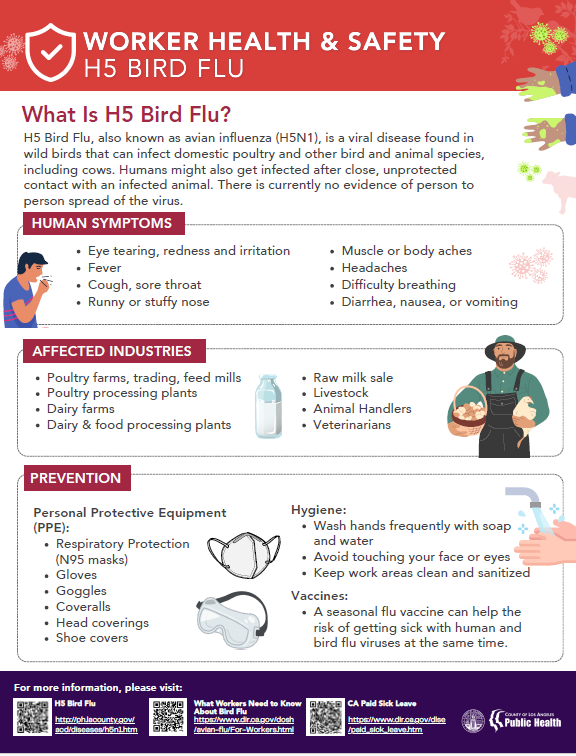
Worker Health & Safety: H5 Bird Flu
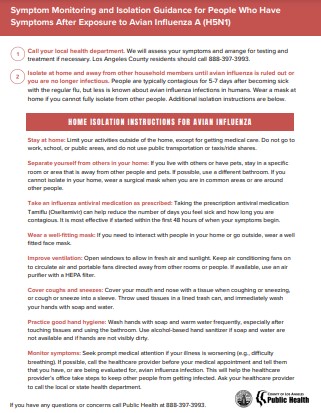
Symptom Monitoring and Isolation Guidance for People Who Have Symptoms After Exposure to H5 Bird Flu
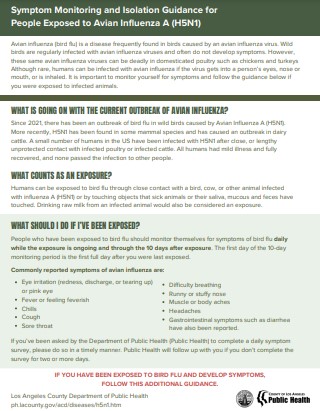
Symptom Monitoring and Isolation Guidance for People Exposed to H5 Bird Flu
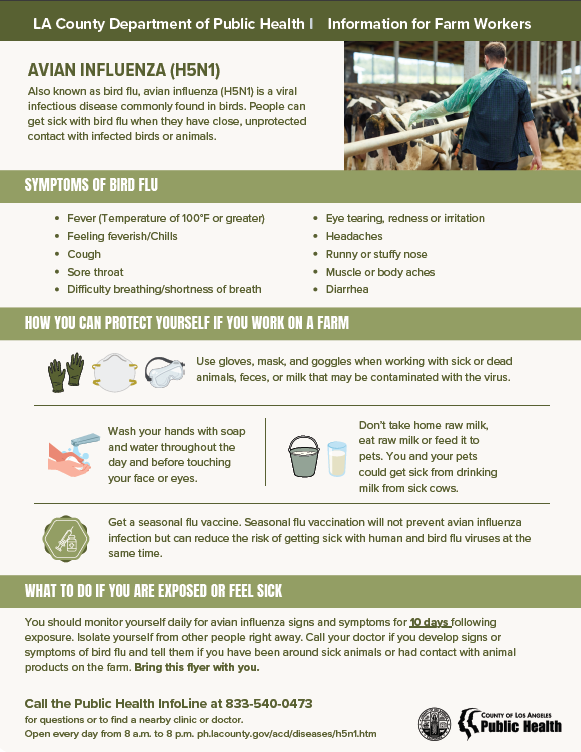
H5 Bird Flu: Information and Frequently asked Questions for Farm Workers
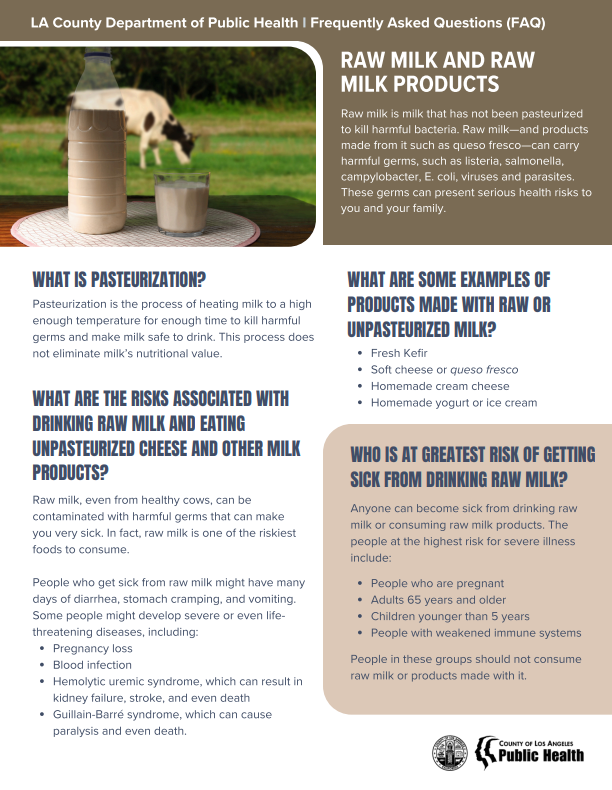
H5 Bird Flu: Information and Frequently asked Questions about Raw Milk Products
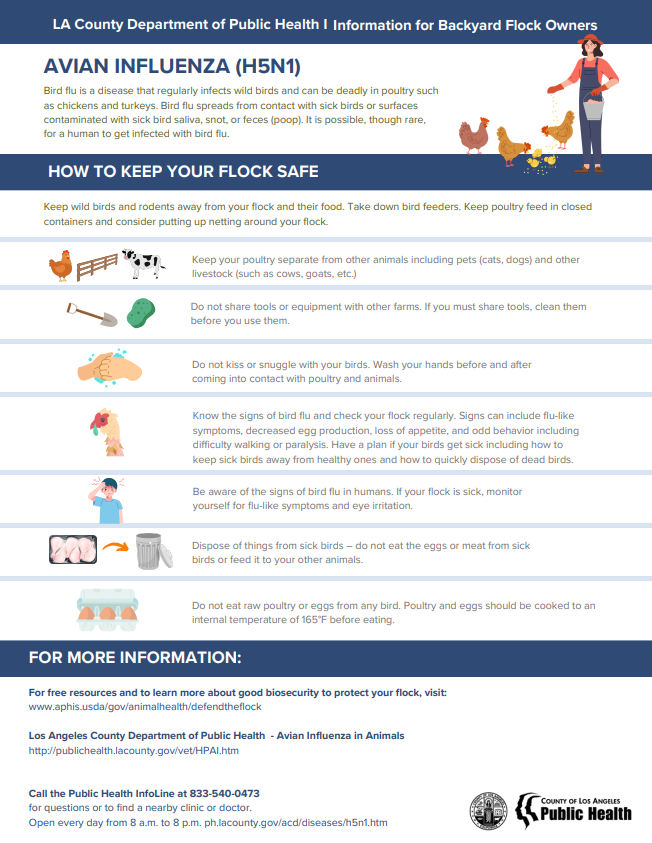
H5 Bird Flu: Information for Backyard Flock Owners
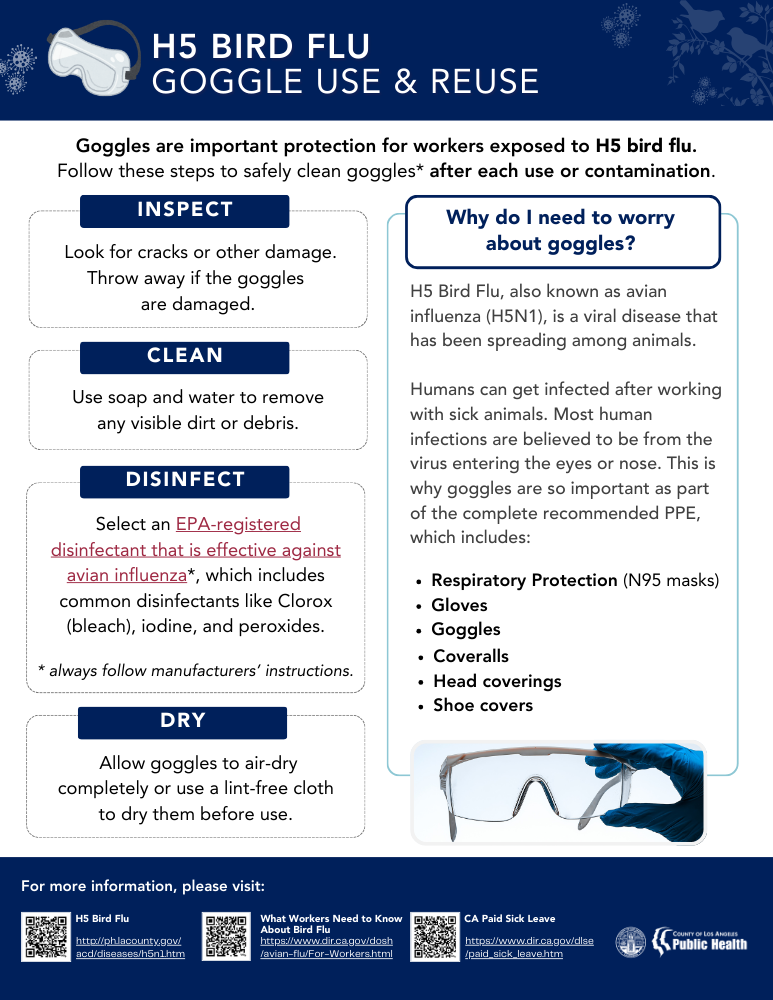
Safe Goggle Use & Reuse
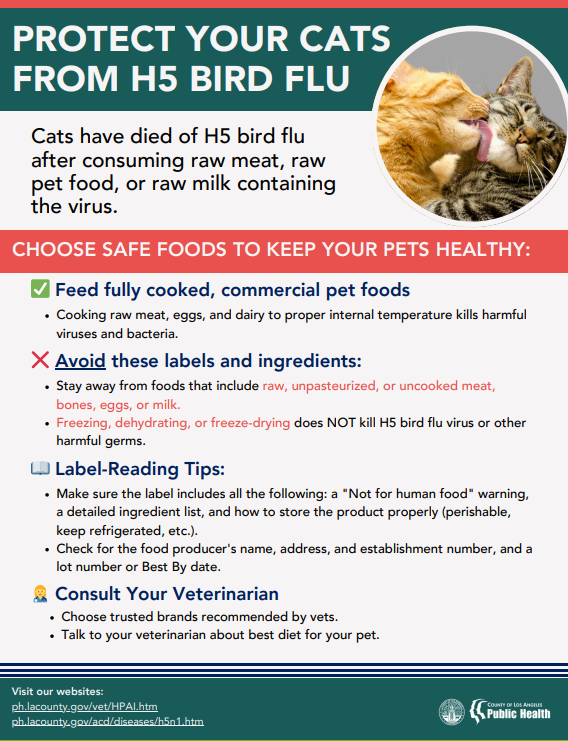
Protect your Cats from H5 Bird Flu
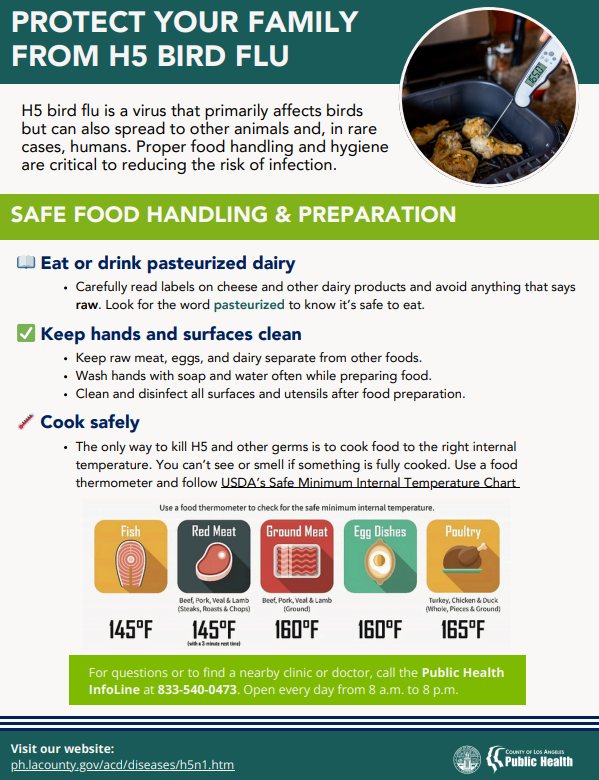
Protect your Family from H5 Bird Flu
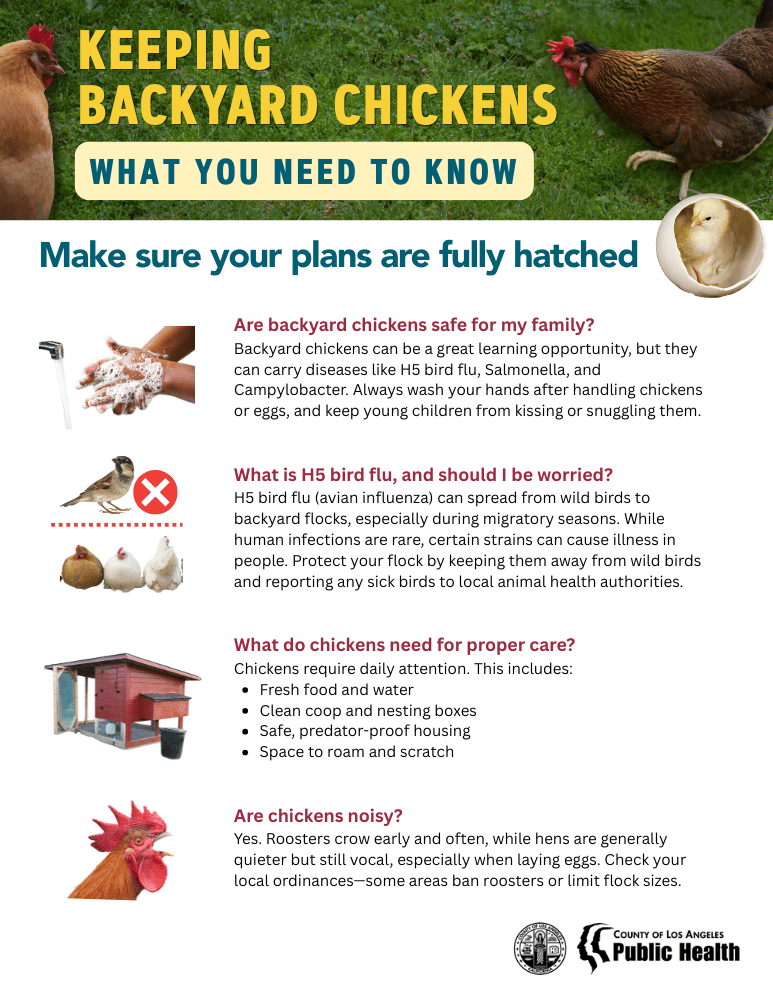
Keeping backyard chickens: what you need to know
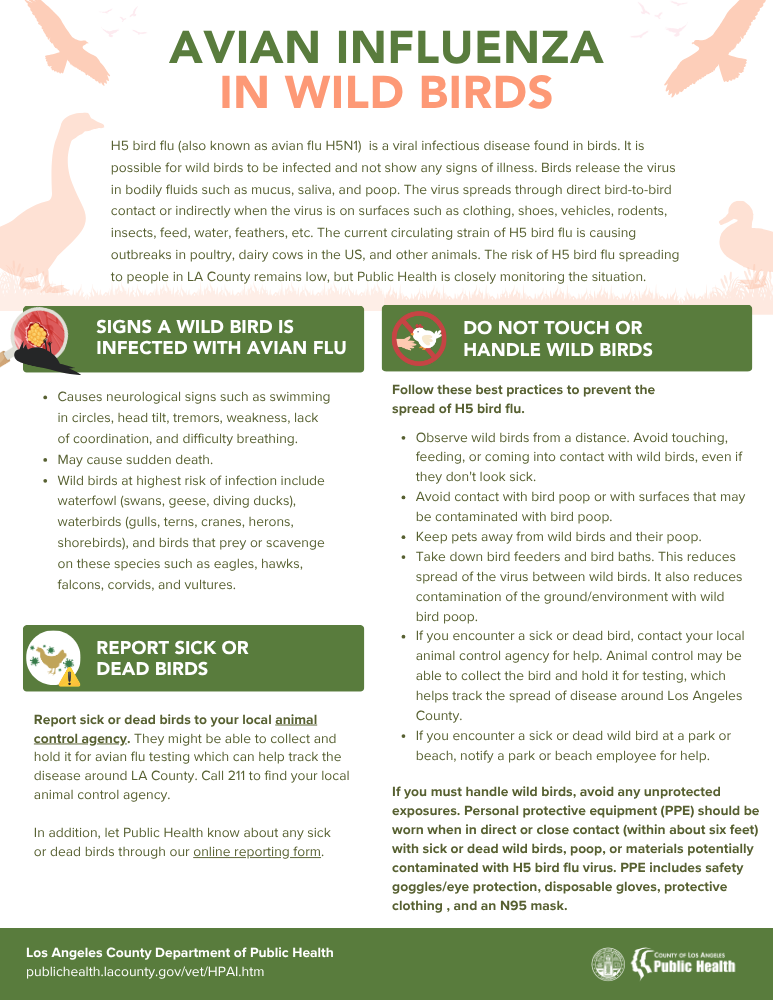
Avian Influenza in Wild Birds