Veterinary Public Health
Animals & Disasters
Animals & Disasters
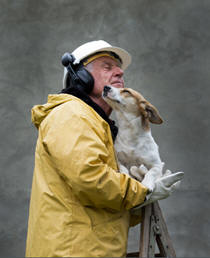

Welcome to our Animal Disaster Preparedness Site
We hope you will find this a helpful resource for the whole family. Please take a look at each of the sections below for helpful tips and resources.
- Pet Safety Fact Sheet - Returning to Areas Affected by Fires, Smoke, and Ash
- Emergency Preparedness & Pets: A Guide for Pet Owners - 2015 guide
- Disaster Planning Tips for Pet Owners - 2017 handout
Video
Disaster Preparedness Tips for the Whole Family
Are you prepared for an Emergency or Disaster?
The ASPCA recommends using a rescue sticker alert to let people know that pets are inside your home. Make sure it is visible to rescue workers, and that it includes the types and number of pets in your household and your veterinarian's phone number. If you must evacuate with your pets, write "EVACUATED" across the stickers so rescue workers don’t waste time looking for them.
One easy step to take is to make Emergency Kits for the whole family, including your pets.
Emergency Kit for People
- Water
- Food
- First Aid Kit
- Medications
- Tools and other supplies (Fire extinguisher, flashlight, etc.)
- Cash
- Important Records/Documents
- Visit Ready.gov for more ideas for your kit

Emergency Kit for Pets
- Water
- Food
- First Aid Kit
- Medications
- Make sure your pet has an ID tag and microchip
- Vaccination, licensing, and other medical records
- A picture of you and your pet together
- Carrier or crate for each pet
- Other supplies (bowls, leash, litter box, toys, etc.)

What should you do during a disaster?
There are many different types of emergencies and disasters, visit the American Red Cross to learn more. They have excellent Apps for your smart phone including a Wildfire App and Earthquake App.
If you are able, bring your pets inside immediately. If you know severe weather is coming, bring your pets in as early as possible to prevent them from injury or running away. Never leave a pet outside or tied up during a storm. Separate your pets (cats, dogs, pocket pets) even if they normally get along.

The situation may cause animals to act aggressively or defensively. Have newspapers or other products for sanitary purposes. Canned or moist food may be fed so they will need less water to drink.
Do you know what you should do if you have to evacuate?
Pets are an important part of your family and animals are affected by disasters and emergencies too. If you have to evacuate, take your pets with you. Pets may not survive if you leave them behind. Call your local emergency management office, animal shelter, or animal control office to get advice and information.

If you are evacuating to a public shelter, service animals are allowed, pets may be allowed in co-location shelters, but many shelters will not allow pets inside. Plan in advance for alternatives like pet-friendly family members or friends outside the disaster area or pet-friendly hotels found at petswelcome.com.
Horse owners should identify in advance how they will trailer their horses to safety in an emergency. Bird owners should make sure that the bird is caged and the cage is covered by a thin cloth or sheet to provide security and filtered light.
Remember, after a disaster or emergency, wherever you are always leash or secure your pets as they may be confused in new surroundings and there may be new dangers like downed power lines or displaced wildlife. The behavior of your pet may change during and after an emergency. Normally quiet and friendly pets may become aggressive or defensive. Watch animals closely in a secured area with access to shelter and water.

Pet Wellness and Safety Before a Disaster
Keep your pet healthy for you and your pets' sake
Regular pet wellness exams, vaccinations, and parasite control helps protect your pet from getting sick.
After an emergency or disaster you may be required to show proof of vaccination for emergency pet sheltering. Remember to keep up-to-date records in your pet’s emergency kit.
Learn more:
- Second-hand smoke harms pets
- Brochure - English / Spanish

Smoking a leading cause of fires.
Did you also know that smoking around pets is harmful to their health?

Pet First Aid & CPR
Do You Know First Aid and CPR for Your Pet?
To find pet first aid & CPR training and classes in your area, visit American Red Cross.
Pet First Aid & CPR App from the American Red Cross also includes a pet-friendly hotel locator.
First Aid Tips for Pet Owners from the American Veterinary Medical Association

Disaster Preparedness for Veterinarians
Are you a veterinarian who wants to help in disasters?
Volunteer for the California Veterinary Medical Reserve Corps (CAVMRC)
The CAVMRC is a unit of the National Medical Reserve Corps and provides veterinary services during local or statewide disasters and emergencies in California. The CAVMRC is supported by the California Veterinary Medical Association and the California Veterinary Medical Foundation and is continually seeking veterinarians, veterinary technicians, and veterinary staff to volunteer their time and services. For more information visit CAVMRC.

Want to learn more about helping animals in disasters?
The California Animal Response Emergency System (CARES) offers stakeholders and the public a wealth of resources. CARES has brochures for the public, for pet owners, and for animal businesses.
Emergency Resources & Other Useful Links
Brochures & Guides
Public Health
- Disaster Planning Tips for Pet Owners
- Emergency Preparedness for Pets: English | Spanish
- Disaster Prep for Pets - Quick Tips - English and Spanish
- Emergency Preparedness & Pets: A Guide for Pet Owners
FEMA
- Preparing Your Pets for Emergencies (FEMA) trifold
- Preparing Your Pets for Emergencies (FEMA) checklist
Animal Control
- Are You and Your Pets Prepared for an Emergency Event? (LA County Animal Care and Control)
American Veterinary Medical Association (AVMA)

Useful Links
- 211 LA County links ALL Los Angeles County residents to services that strengthen families and improve their economic success; equips them to prepare their children for school; helps them find and keep jobs with opportunities for advancement; helps them identify and gain access to public benefits and subsidies; and increases their access to quality health care. Professional community resource advisors help callers with critical issues such as health care and substance abuse, domestic violence, shelter, food, legal and financial assistance, programs for children and seniors and different types of mental health services.
- American Red Cross exists to provide compassionate care to those in need. Their network of generous donors, volunteers and employees share a mission of preventing and relieving suffering, here at home and around the world, through five key service areas.
- CA.gov MyHazards. Visit this site to discover the hazards that exist in your area and learn how to reduce YOUR risk! Remember, the best way to recover from disasters is by reducing the risks before a disaster strikes.
- County of Los Angeles Office of Emergency Management. The Chief Executive Officer's Office of Emergency Management (OEM) is charged with the responsibility to organize and direct preparedness efforts for Los Angeles County. OEM's area of responsibility includes county government, all cities (88), school districts (94) and special districts (over 100) within county borders.
- Emergency Preparedness and Response Program (EPRP) of the Los Angeles County Department of Public Health. The program works closely with governmental, academic, and community partners to ensure that all Angelenos are prepared for and able to respond to natural and intentional emergencies.
- Emergency Survival Program: An awareness campaign designed to increase emergency preparedness at home, in the community, at work and at school.
- Los Angeles County’s Emergency Survival Guide: An excellent resource for your disaster planning. Includes information for companion animal and horse owners.
National Non-Profit Organizations Involved in Emergency Response
- American Humane Association (AHA)
- American Society for the Prevention of Cruelty to Animals (ASPCA)
- Humane World for Animals (formerly the Humane Society of the United States)
- International Fund for Animal Welfare (IFAW)
- RedRover
- Ready.gov is a national public service advertising (PSA) campaign designed to educate and empower Americans to prepare for and respond to emergencies including natural and man-made disasters. The goal of the campaign is to get the public involved and ultimately to increase the level of basic preparedness across the nation.