Veterinary Public Health
Cannabis & Pets
Did you know?
Cannabis is still illegal for use in veterinary medicine in California.
Federal law prohibits veterinarians from possessing, administering, dispensing, or prescribing cannabis and related products. Although California state laws legalized cannabis use for adults over 21 years of age, and physicians may prescribe marijuana for human patients, California law still does not allow veterinarians to prescribe cannabis for animals.
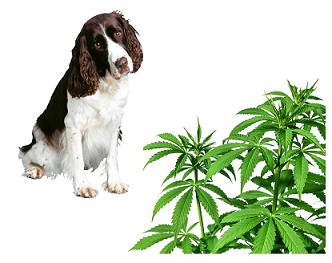
What is Cannabis?
The term “cannabis” includes marijuana and hemp products. “Marijuana” refers to all parts of the Cannabis plant, including the flowering portion, leaves, seeds, extracted resin, and any products derived from these parts. Marijuana often contains high levels of compounds called cannabinoids. The two main cannabinoids are tetrahydrocannabinols (THC) and cannabidiols (CBD). THC is a psychoactive compound that affects brain function and is what gives you the “high”. Recreational marijuana often contains high levels of THC. CBD is a non-psychoactive compound and is found in higher levels in medical marijuana. Cannabis products come in a variety of forms, including edible products (e.g. candy, cookies), plant products (e.g. leaves, cigarettes), and oil/butter.
Cannabis Safety and the Law
Is cannabis safe for pets?
Products marketed for pets often report they are made from hemp and may be labeled as “cannabis” rather than “marijuana”. There is very little research on the effects of cannabis on pets for safety, appropriate dosage, and effectiveness. There is currently no way to guarantee the purity of the ingredients in cannabis products, as there is no government organization overseeing the quality control of these products. Although cannabis pet products may claim to have health benefits for your pet, this claim has not been tested or verified by the Food and Drug Administration (FDA). It is important to note also that hemp is not approved by the FDA for use as an ingredient in animal food, products or pharmaceuticals.
Dogs and cats may be more sensitive to the effects of cannabis than people, and even small amounts can be enough for pets to develop possibly life-threatening toxicity. Pets commonly develop toxicity from ingestion of cannabis or cannabis products, but secondhand smoke inhalation can also be harmful. THC can change how the liver works. Because the liver plays an important role in processing food and medications, THC exposure may alter the effects of other important medications or supplements pets are taking.
Can a veterinarian prescribe cannabis or cannabis products for my pet?
No. In the United States, it is illegal for veterinarians to prescribe cannabis or cannabis products to pets. Federal law prohibits veterinarians from possessing, administering, dispensing, or prescribing cannabis and related products. Veterinarians who are prescribing cannabis products for pets are also in violation of California state law. While California Proposition 64 legalized cannabis use for individuals 21 or older, there is no legislation allowing individuals to give cannabis products to pets. Federal law still considers marijuana a Schedule 1 controlled substance, meaning it is illegal, has a high potential for abuse, and has no currently accepted medical use in the United States, for humans or animals.
On September 27, 2018, California Legislature Assembly Bill 2215 (AB-2215), regarding cannabis, veterinarians and animals, was approved by the governor. This bill allows veterinarians to discuss medicinal cannabis use in animals with pet owners, however it is still illegal for veterinarians to prescribe cannabis for pets.
What are the signs of cannabis toxicosis in pets?
The most common signs of cannabis toxicosis include: lack of balance and coordination, disorientation, slow heart rate, dilated pupils, sensitivity to light and sound, and dribbling urine. Other signs of cannabis toxicity may include: excessive drooling, seizures, vomiting, and lethargy.
If your pet ingested cannabis or cannabis products, or if your pet is showing signs of cannabis toxicosis, contact your veterinarian right away. In situations of cannabis toxicity, it is important to take your pet to a veterinary hospital immediately. Please be honest with your veterinarian about what cannabis products your pet has been exposed to or has ingested. Failure to do so can make it difficult to correctly diagnose your pet and will delay appropriate treatment.
Reporting cannabis toxicosis in pets
Veterinarians and pet owners in Los Angeles County are now able to report cases of cannabis toxicity to the Veterinary Public Health program. Our reporting forms are designed to keep the reporter and the pet owner anonymous, so any personal information will not be required. We encourage reporting cases of cannabis toxicity to help our program collect information on cannabis products that are causing poisoning in pets, and potentially identify what amounts of cannabis may be dangerous for pets.
How to report
Veterinarians and pet owners can report cases of cannabis toxicosis through our reporting page.
If you have additional questions about reporting cannabis toxicosis in pets in Los Angeles County, please call our office at (213) 288-7060.
Resources
Resources for Pet Owners
Resources for Veterinarians
- California Guidelines for Veterinarian Discussion of Cannabis Within the Veterinarian-Client-Patient Relationship. Effective January 1, 2020
- California Legislature Assembly Bill 2215
- AVMA Cannabis Use and Pets